
2024/10/15
Parts Knowledge
FRP Composite Material Really as Good as You Think? FRP Waste Management
- Introduction to FRP Composite Materials
- Challenges of FRP Waste Management
- Generation of Large Quantities of FRP Waste
- Feasibility of Recycling and Reusing FRP Waste
- Improving the Manufacturing Process
- Advantages of Linkcooling™ Stainless Steel Closed-Circuit Cooling Towers Over FRP Cooling Towers
- Conclusion
Introduction to FRP Composite Materials
FRP, or Fiber-reinforced plastic, is a composite material made of glass fibers and resin. It is characterized by its lightweight, rigidity, non-conductivity, and corrosion resistance, making it a widely used material worldwide. Products made from FRP include bathtubs, cooling towers, yachts, building materials, printed circuit boards, household appliances, automotive parts, and aerospace components. Its applications span from everyday consumer goods to the aerospace industry.
Challenges of FRP Waste Management
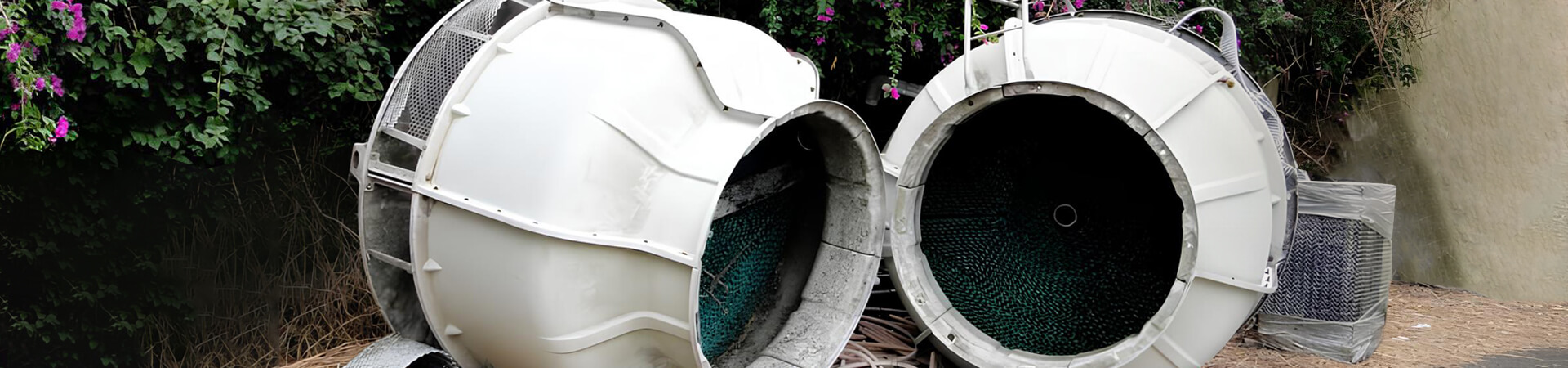
The widespread use of FRP products has led to significant waste management challenges. Discarded FRP products are often seen abandoned in open areas, as current FRP waste in Taiwan is not recyclable and has low reuse potential. This raises concerns about the issues surrounding FRP waste disposal.
Generation of Large Quantities of FRP Waste
Taiwan consumes over 100,000 tons of FRP annually, producing tens of thousands of tons of waste FRP each year. The current methods for handling this waste are landfilling and incineration, both of which have significant drawbacks.
Current FRP Waste Management Methods and Issues
Landfilling
- Occupies land resources
- High processing costs
- Secondary pollution
Incineration
- High calorific value
- Large amount of glass residue
- Environmental regulations limitations
Feasibility of Recycling and Reusing FRP Waste
To address FRP waste disposal issues, scientists and engineers have explored various recycling and reuse methods, including mechanical, chemical, and thermal treatments.
Mechanical Treatment: Crushing waste FRP and incorporating it into concrete or related plastic products.
Chemical Treatment: Using special solutions to separate resin from fibers for reuse.
Thermal Treatment: High-temperature pyrolysis to separate resin and fibers for reuse.
International Experience
In Japan, FRP waste is primarily crushed and used as raw materials for the cement and molding industries. In Taiwan, although there is substantial research on the feasibility and technology of FRP recycling, practical implementation is limited due to inadequate equipment and track records. Without a comprehensive processing mechanism, FRP products pose a significant environmental burden, potentially requiring high disposal costs for proper management.
Improving the Manufacturing Process
The FRP manufacturing process involves a wide range of chemicals, including glass fibers, resin, and styrene. Styrene is a toxic chemical raw material that poses significant health risks to workers. Therefore, FRP manufacturing is not worker-friendly, with each product coming at the cost of worker health.
A good company should prioritize environmental friendliness and provide a safe working environment for its employees. Linkcooling has improved the materials used in cooling tower manufacturing by adopting non-toxic, low-pollution stainless steel materials, eliminating harmful chemicals. Our stainless steel cooling towers not only offer excellent durability and performance but also ensure that every step of the manufacturing process meets environmental and health standards, providing a safer work environment for workers.
Advantages of Linkcooling Stainless Steel Closed-Circuit Cooling Towers Over FRP Cooling Towers
Durability and Environmental Friendliness
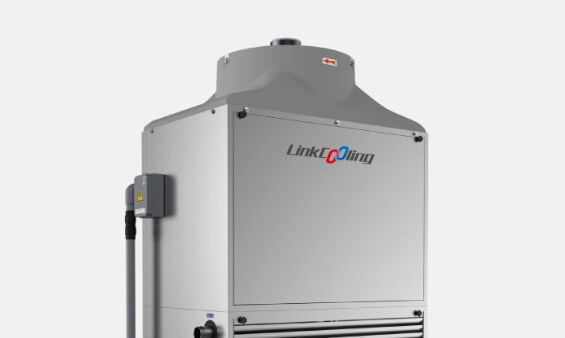
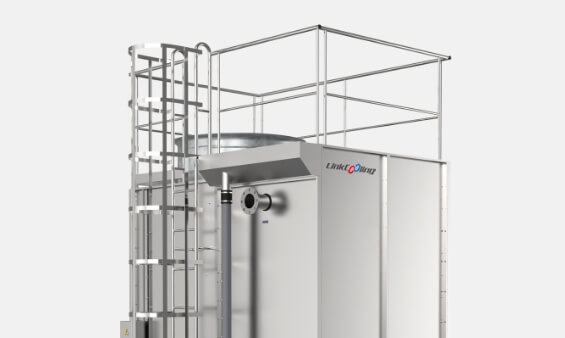
Compared to FRP materials, our stainless steel cooling towers have significant advantages in durability and environmental friendliness. While FRP cooling towers are lightweight and corrosion-resistant, they have a limited lifespan and are difficult to dispose of. Our cooling towers use #304 stainless steel, which is durable, corrosion-resistant, and has a long service life, significantly reducing the frequency of replacements and maintenance.
Low Maintenance Costs
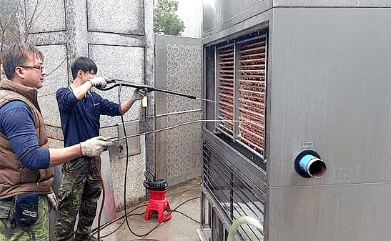
The internal structure of stainless steel closed-circuit cooling towers is simple, with no scale formation, making them easy to clean and maintain. One person can perform maintenance, reducing operational costs.
Conclusion
FRP composite materials have brought convenience to our lives through their extensive applications. However, their waste management issues cannot be ignored. When choosing cooling towers, Linkcooling's stainless steel closed-circuit cooling towers offer significant advantages in durability, environmental friendliness, and performance, making them the best choice for your cooling system. By improving manufacturing processes, choosing environmentally friendly materials, and establishing comprehensive recycling mechanisms, we can work together to reduce the burden on our planet's future!