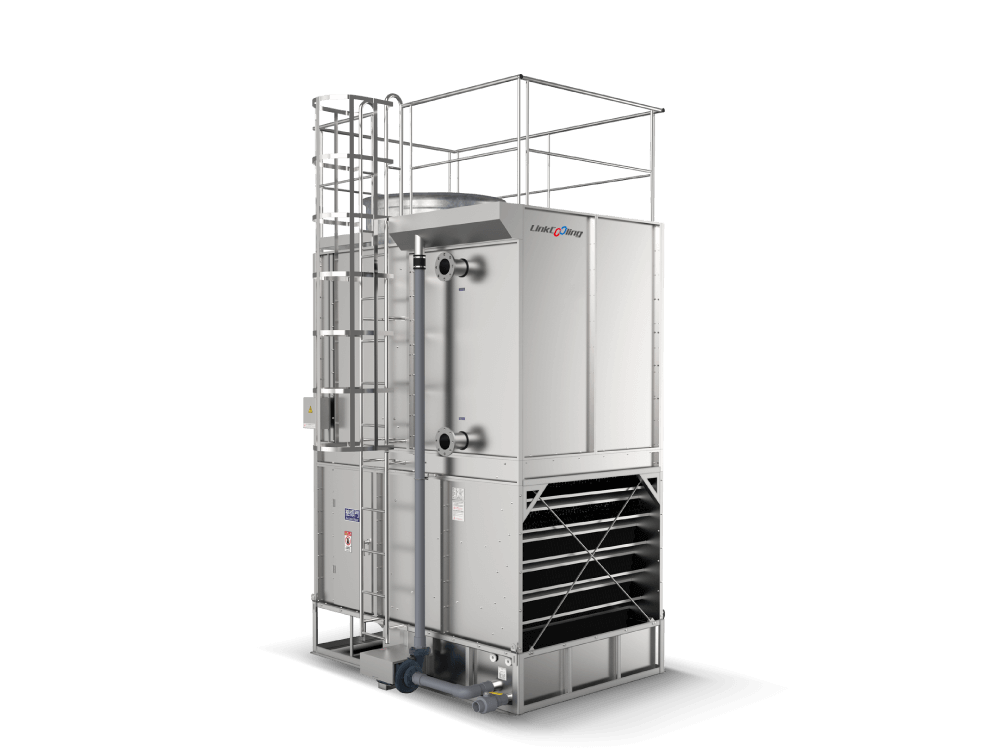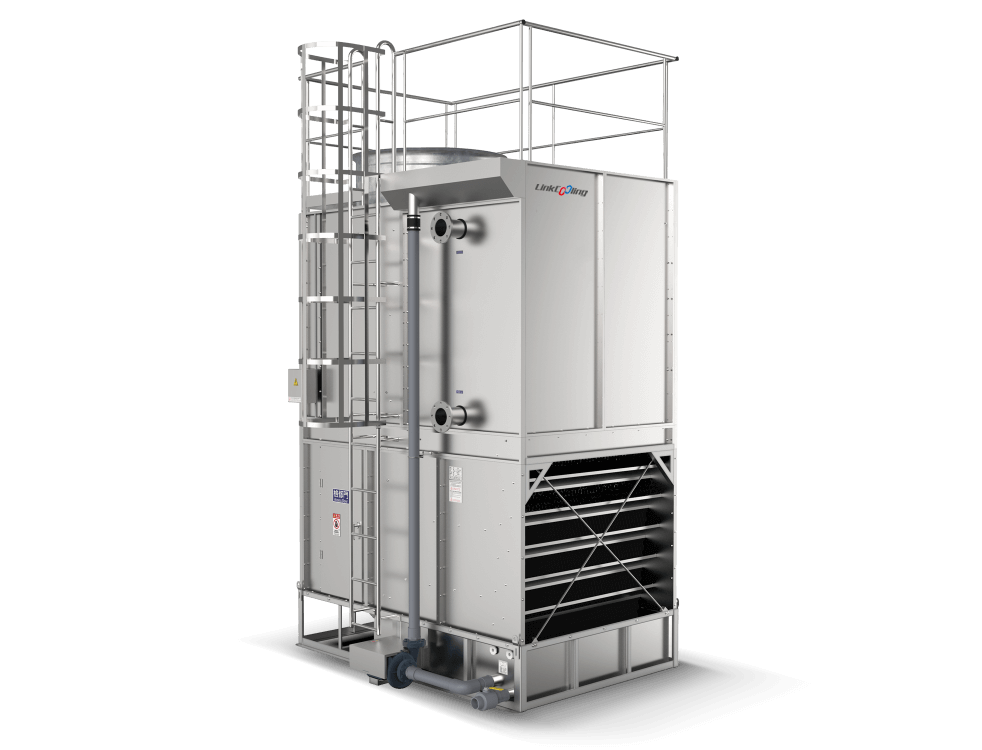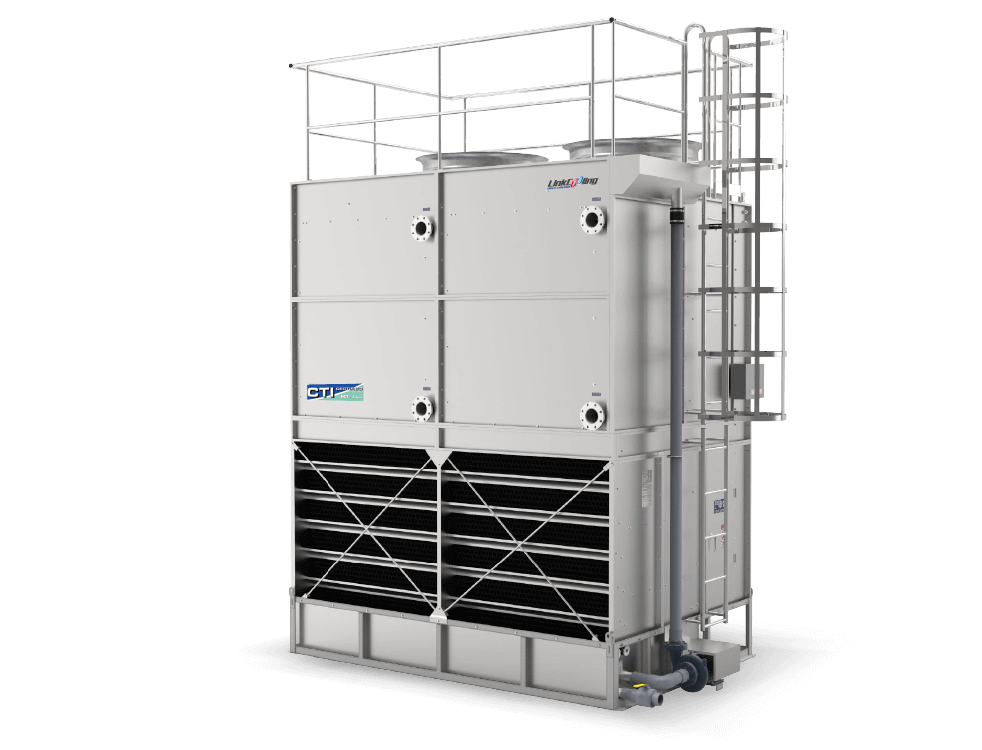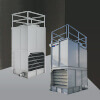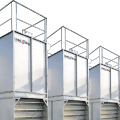
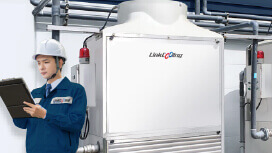

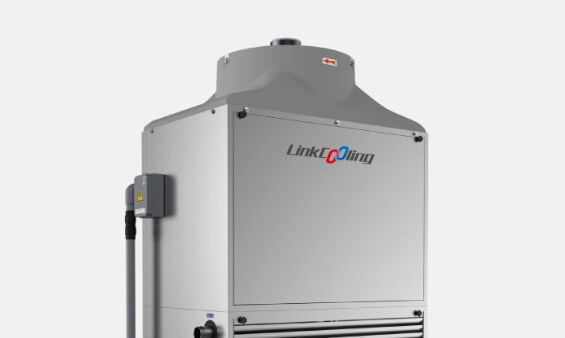
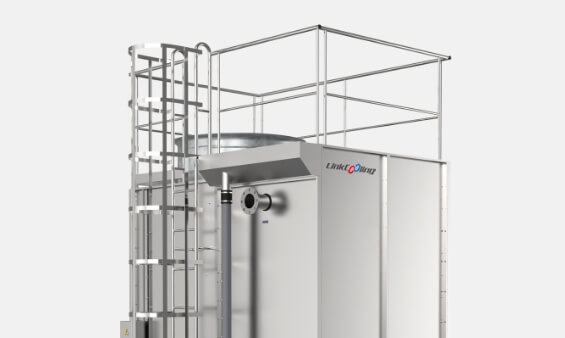
Cooling tower - HCT J SERIES

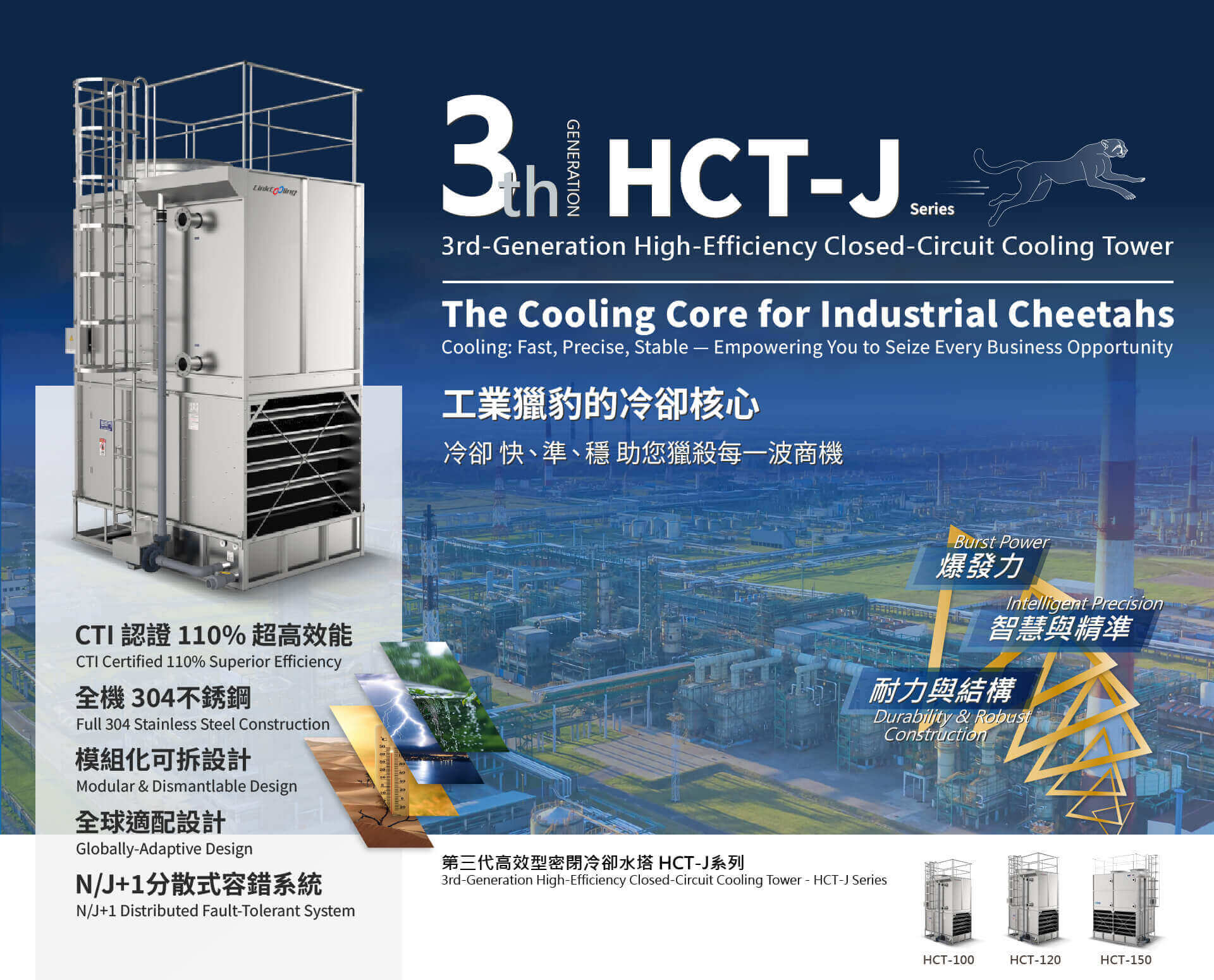
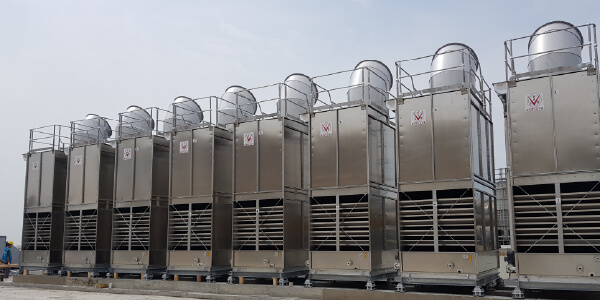
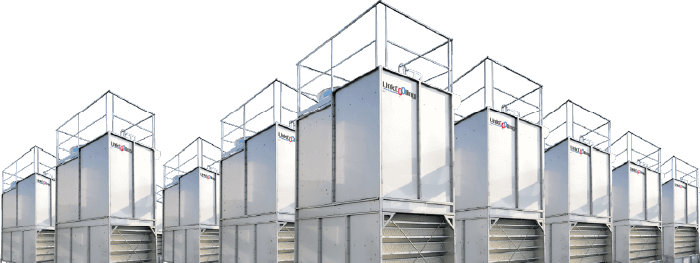
3rd-Generation High-Efficiency Closed-Circuit Cooling Tower – HCT-J Series
3rd-Generation High-Efficiency Closed-Circuit Cooling Tower — HCT-J Series
Powering High-Performance Industries with Precision Cooling

In today’s fast-moving industrial world, efficiency determines competitiveness. Every surge in production generates intense heat, and the ability to dissipate it quickly defines how fast operations can accelerate again.

The Linkcooling HCT-J Series is engineered for this purpose. It delivers powerful, stable, and ultra-efficient cooling that keeps your production running at maximum performance without interruption.

With its advanced With its advanced co-directional airflow and dual-circuit heat-exchange system, combined with constructed with corrosion-resistant 304 stainless steel construction, the HCT-J sets new standards for durability, sustainability, and long-term value.

Preferred by leading precision manufacturers and global engineering firms, the HCT-J Series is more than a cooling tower—it's the cooling engine that keeps your business moving forward.

Building on more than 30 years of cooling expertise from JIN-HUI, Linkcooling is driven by a philosophy of “zero-based innovation,” redefining the global standard for cooling technology. Our mission goes beyond achieving peak performance—we design solutions that meet the industrial world’s highest expectations for energy efficiency, intelligence, and long-term sustainability, empowering businesses worldwide with cooling systems that deliver exceptional value over time.

As Linkcooling’s flagship line engineered for high-precision manufacturing and large-scale industrial applications, the HCT-J Series marks a new milestone in closed-circuit cooling system innovation. With 110% certified performance, a 30-year stainless-steel structure, maintenance-friendly modular architecture, global installation adaptability, and the N/J+1 distributed fault-tolerant system, HCT-J provides companies with a truly world-class cooling solution—balancing efficiency, reliability, and sustainability at the highest level.

These five breakthroughs transform cooling equipment from a consumable into a long-term asset—one that continues generating value year after year, strengthening your competitive edge in the global market.
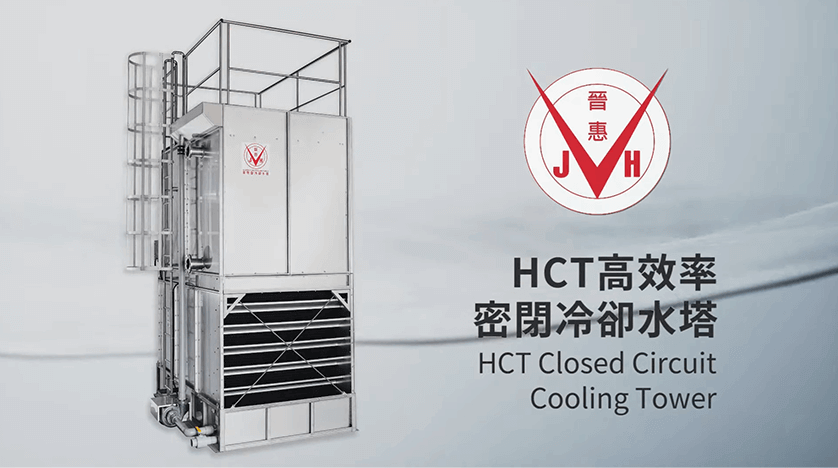
HCT Video Introduction

HCT-J Series – Key Features and Engineering Advantages

CTI-Certified 110% High Performance

CTI-Certified 110% High Performance

Performance exceeds international standards with CTI certification, achieving an impressive 110% cooling efficiency in actual testing—and maintaining stable, high performance over long-term operation.

Full 304 Stainless Steel Construction

Full 304 Stainless Steel Construction

Durable structural design featuring full 304 stainless steel construction to withstand harsh industrial environments. Its corrosion-proof architecture delivers a service life of over 30 years, eliminating rust issues at the source.

N/J+1 Distributed Fault-Tolerant System
N/J+1 Distributed Fault-Tolerant System

N/J+1 modular configuration featuring a distributed redundancy and expansion resource pool, ensuring uninterrupted production and enabling flexible deployment.

Modular Quick-Release Design
Modular Detachable Design

Modular quick-release maintenance design paired with unified spare parts, enabling fast servicing and reducing downtime risk.

Global-Compatible Design

Global-Compatible Design

Global-ready preassembled rapid-deployment design combined with worldwide spare-parts support, fully meeting international installation and maintenance requirements.

Performance Certified to the Highest International Standards
CTI Certified Cooling Tower Performance Icon

CTI-Certified 110% Ultra-High Performance

Linkcooling HCT-J is certified by the Cooling Technology Institute (CTI), passing the CTI-201/202 performance test with an impressive 110% verified cooling efficiency. This ensures cooling capacity that is truly accurate, stable, and non-degrading over long-term operation.

In industries where peak efficiency defines product quality and operational cost, cooling performance is a mission-critical factor. The Linkcooling HCT-J Series builds upon CTI-certified reliability, enhanced through co-directional air–water engineering, CFD airflow simulation, and a scale-free closed-circuit cooling system. Together, these technologies eliminate the weaknesses of traditional cooling towers—efficiency decline, scaling accumulation, and excessive power consumption.

We provide more than equipment—we deliver long-term, verifiable performance assurance.

  • 110% CTI-verified cooling efficiency – Outperforms international standards with measurable ROI impact.

  • Co-directional airflow & composite-flow design – Minimizes interference and reduces scaling formation by up to 10%.

  • CFD-optimized global adaptation – Ensures stable performance across varying climates and installation environments.

  • Scale-free closed-circuit cooling system – Complete separation of internal and external water ensures clean, uncontaminated circulation.

SCALE-FREE CLOSED COOLING SYSTEM

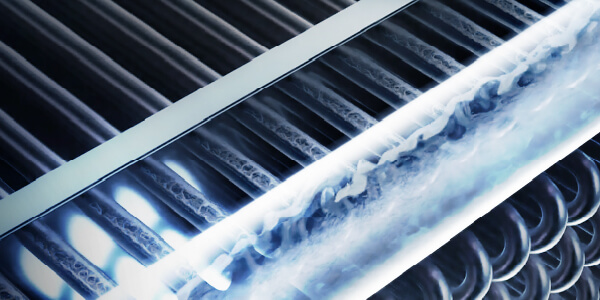
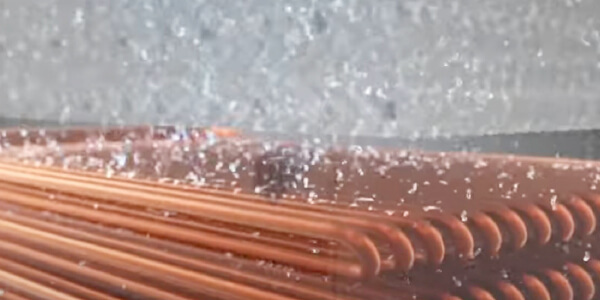
The HCT-J Series utilizes a scale-free closed-circuit cooling system with a dual-loop independent heat exchange design that achieves complete physical isolation between internal and external water. This eliminates water contamination and scaling at the source, providing a high-performance, low-maintenance thermal management solution ideal for industries with extremely strict water-quality requirements—such as semiconductors, precision manufacturing, and plastics & rubber processing.

READ MORE
ENVIRONMENT-ADAPTIVE CFD SIMULATION CFD

CFD (Computational Fluid Dynamics) environmental adaptation simulation is one of the core technologies enabling the HCT-J Series to achieve its CTI-certified 110% ultra-high performance. By building high-precision numerical models, we optimize system behavior across diverse environmental conditions during the design phase, ensuring that real-world performance consistently exceeds design specifications.

READ MORE
AIR-WATER CO-CURRENT + HYBRID FLOW DESIGN

The same-direction air–water flow and hybrid-flow architecture are more than structural innovations — they represent a revolutionary application of fluid dynamics in cooling technology. This breakthrough enables the HCT-J series to surpass traditional theoretical efficiency limits, achieving an outstanding 110% performance and setting a new technical benchmark for industrial cooling systems.
READ MORE

Introduction 1

Introduction 2

Introduction 3

A Durability Breakthrough Against Salt Corrosion, Chemical Exposure, and Long-Term Environmental Stress
HCT-J Series Stainless Steel Structure Icon

Full 304 Stainless Steel Construction

The HCT-J series adopts a complete 304 stainless-steel integrated structure, upgrading every component—from casing to basin to heat-exchange coils. This eliminates the long-standing issues of FRP aging and metal corrosion found in traditional cooling towers. With precision laser cutting and a frameless folded-plate design, the HCT-J achieves exceptional structural strength and corrosion resistance, ensuring over 30 years of stable operation even in harsh environments. This transforms the cooling tower from a “consumable” into a true long-term industrial asset.

Core Technologies:

  • Stainless-Steel Structural Design: The entire system is built with SUS304 stainless steel—including the 2–4 mm casing, seamless deep-drawn water basin, and 1 mm precision coils. After passing strict chemical corrosion tests, the structure is fully protected against rust, cracking, and fatigue, making it ideal for extreme environments such as acid rain, salt spray, and industrial dust.

  • Frameless Folded-Plate Engineering: Instead of traditional screw-fastened frames, the HCT-J uses an advanced folded-plate design, reducing joints and vibration points. Combined with next-generation laser drilling and automated welding, this ensures perfect dimensional accuracy, low-resonance operation, and outstanding weather resistance. The enhanced rigidity also meets seismic simulations (equivalent to Grade 6 earthquake resistance), guaranteeing durability and making future servicing, disassembly, or relocation easier and safer.

Feature Traditional FRP / Galvanized Steel HCT-J Full Stainless-Steel Structure
Service Life 5–8 years (prone to aging & corrosion) 30+ years (corrosion-free)
Maintenance Frequency High (requires periodic anti-rust treatment) Very Low (no corrosion protection needed)
Environmental Resistance Limited (UV, humidity sensitive) Comprehensive (acid/alkali, salt, dust resistant)
Structural Stability Degrades over time Lifetime structural rigidity
Residual Value Low (difficult to recycle) High (100% recyclable materials)

The stainless-steel strategy behind the HCT-J series represents a complete innovation across material science and structural engineering. Rather than following the industry’s “low-cost-first” approach, we design based on the principle of achieving the lowest total lifecycle cost, providing customers with an industrial cooling system that requires no compromise.

STAINLESS STEEL STRUCTURE

Built entirely with SUS304 stainless steel, the HCT-J delivers exceptional corrosion resistance and long-term durability. Designed to withstand salt, chemicals, and harsh industrial environments, it offers a reliable lifespan of over 30 years—eliminating rust, reducing maintenance, and turning cooling equipment into a true long-term asset.

READ MORE
Support-Free Bending Technology

With our precision support-free bending technology, the stainless-steel chassis is formed as a seamless structure—removing 87% of joints and corrosion risks. Certified for Grade 6 seismic and Grade 17 wind resistance, it delivers zero resonance and lifetime durability, setting a new benchmark for cooling-equipment reliability.
READ MORE

Introduction 1

Introduction 2

Engineered for Mission-Critical Operations, Scalable for Tomorrow’s Demands
N/J+1 Distributed Fault-Tolerant Cooling Architecture Icon

N/J+1 Distributed Fault-Tolerant System

While traditional large cooling systems continue to suffer from single-point failures and rigid expansion limitations, the Linkcooling HCT-J Series redefines industrial reliability through an innovative distributed fault-tolerant architecture. We decompose the total cooling demand (N) into multiple independent HCT-J modules (J), and introduce a +1 standby resource pool to create a cooling ecosystem with no single point of failure, full scalability, and true online maintainability.

This is not merely a set of cooling units—it is a next-generation cooling infrastructure built on modularity, intelligence, and resilience. It provides enterprises with near 100% system availability, ensuring production continues even under extreme conditions and achieving the ultimate goal of “zero cooling risk.”

  • Fault-Tolerant System Architecture: The standby module remains online and ready, enabling hot-swap maintenance and rotational servicing. A single-module failure does not affect overall cooling performance, achieving true zero-downtime operation.

  • Flexible Scalability: The modular architecture supports horizontal scale-out, allowing additional modules to be added as production capacity grows.

  • Precision Environmental Control: Combined with wet-bulb temperature and on-site thermal conditions, the N/J+1 multi-module design enables advanced energy-saving load rotation and intelligent operation scheduling.

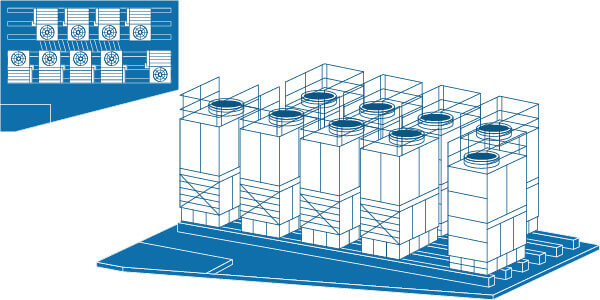
  • Optimized Space Utilization: The narrow-profile design adapts to constrained plant layouts and supports multiple deployment configurations (linear, L-shaped, U-shaped). It reduces required installation space by up to 30% compared to conventional closed-circuit cooling towers.

DISTRIBUTED FAULT-TOLERANT COOLING SYSTEM

Linkcooling replaces traditional standby redundancy with an intelligent resource-orchestration core, allowing each HCT-J module to operate independently. When a fault occurs, the affected module is automatically isolated without impacting the rest of the system. Supporting horizontal scale-out expansion, the cooling capacity can be flexibly adjusted to match production fluctuations and future growth—delivering a truly uninterrupted cooling solution.
READ MORE

Introduction 1

Redefining the way industrial cooling equipment is maintained
Modular Quick-Release Design Icon

Modular Quick-Release Design

The HCT-J Series adopts an innovative “LEGO-style modular architecture,” deconstructing the traditional monolithic cooling tower into multiple independent functional modules. Through precision interface engineering and standardized specifications, the fan module, heat dissipation module, and spray system module can be rapidly detached and replaced, redefining maintenance standards for industrial cooling equipment.

Rapid Maintenance System:

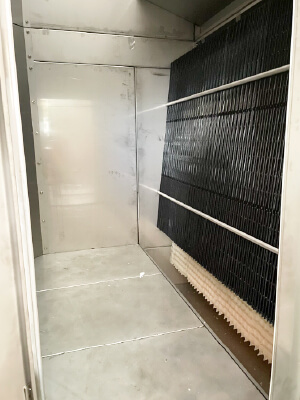
  • Detachable Heat Dissipation Fins: UV-resistant ABS fins designed for pressure-wash cleaning and physical debris removal, fully reusable.

  • Exposed Water Basin Structure: Allows cleaning without shutting down the system, reducing maintenance time by 70%.

  • Direct-Drive Fan Module: Beltless design eliminates traditional transmission failure points and cuts replacement time by 50%.

Standardized Component System:

  • Universal Component Design: Unified specifications across the entire series, including spray nozzles, spray pumps, and fan modules.

  • Single Spare-Part Strategy: One spare part supports all HCT-J units on-site, reducing inventory variety by 80%.

Category Traditional Cooling Systems HCT-J Modular System Improvement
Average Maintenance Time 8–12 hours 2–4 hours 67% Reduction
Number of Spare Parts 10–15 types 4–6 types 80% Reduction
Shutdown Maintenance Frequency 2–3 times per year Zero downtime 100% Improvement
Required Skill Level Specialized technicians General technicians Lowered threshold
UNIVERSAL SPARE PARTS

The HCT-J Series is built on a **global unified specification**, using standardized interfaces and shared components to ensure full interchangeability across all models. This turns spare-parts management into a true operational advantage and enables a **“one spare fits all”** inventory strategy that is efficient, economical, and highly reliable.
READ MORE

Introduction 1

Cross-Continental Deployment Powered by Digital Simulation & Modular Engineering
Global Adaptation Design Icon

Global Adaptation Design

From the earliest design phase, the HCT-J Series integrates CFD (Computational Fluid Dynamics) simulation technology, using high-precision fluid models to recreate real-world operating conditions—including airflow, water distribution, heat exchange, and drift behavior. This digital verification process identifies potential risks in advance, eliminates design blind spots, and, combined with CTI-certified performance testing, ensures every HCT-J unit maintains stable performance across global environments.

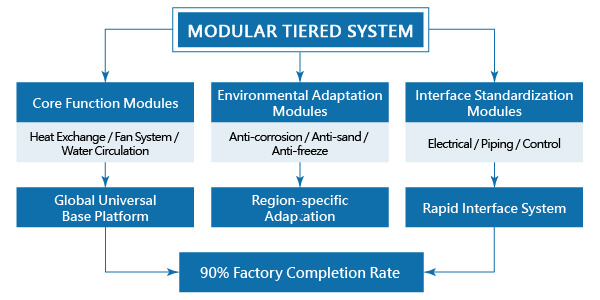
With factory pre-assembly and modular packaging engineering, more than 90% of each unit is completed before shipment, drastically reducing on-site installation complexity and construction time.

During model selection, the system uses a dual-criteria evaluation mechanism (environmental parameters + load requirements) to determine the optimal configuration. Additionally, we provide global compliance customization, enabling seamless adaptation to UL, CE, and other regional safety standards—achieving a true “enabling seamless adaptation to regional safety standards through country-specific design compliance” deployment strategy.

HCT-J delivers a cooling infrastructure that combines high reliability with rapid deployment—ideal for multinational enterprises.

Four Core Engineering Pillars Creating a Closed-Loop Global Adaptation Framework

  1. CFD Operational Simulation:
    CFD modeling validates airflow, water flow, and heat exchange performance during the design stage, ensuring optimal efficiency and long-term stability.

  2. Pre-Assembled Modular Engineering:
    Factory pre-assembly and modular packaging are engineered to fit ISO container standards, lowering international logistics costs and reducing on-site installation workload.

  3. Selection & Configuration System:
    A dual-parameter evaluation model (environment × load) accurately matches customers with the most suitable cooling configurations, optimizing performance and energy consumption.

  4. Global Certification & Compliance Customization:
    CTI performance certification is complemented by international safety standard conversions (UL, CE, etc.), along with localized engineering modifications to ensure consistent global deployment.

From design, manufacturing, and testing to real-world operation—and back to design refinement— Linkcooling’s HCT-J Series forms a continuous improvement loop, delivering a cooling infrastructure solution that combines high reliability with rapid deployment for multinational enterprises.

GLOBALLY ADAPTIVE DESIGN

The HCT-J Series achieves true global adaptability through four core technological pillars: CFD operational simulation that validates performance and system stability in advance; pre-assembled modular engineering that delivers over 90% factory completion; an intelligent selection system that precisely configures the optimal model combination; and global certification with safety-standard customization services to ensure compliance across regions. This integrated design framework enables HCT-J to rapidly adapt to any environment and provide high-efficiency cooling solutions for multinational enterprises.

READ MORE

Introduction 1
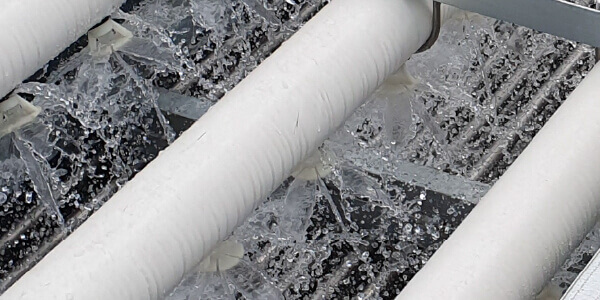
SCALE-FREE CLOSED COOLING SYSTEM

Physical isolation technology reduces water treatment costs by 90% and maintains pristine water quality.

In high-performance industrial cooling, deteriorating water quality is one of the most critical factors that prevents cooling systems from maintaining long-term efficiency. Traditional open-loop towers suffer from continuous evaporation and environmental contamination, causing scaling, corrosion, and biofilm formation. As a result, heat-exchange efficiency typically declines by 5–15% per year, making it difficult for production equipment to remain stable even when paired with oversized cooling towers.

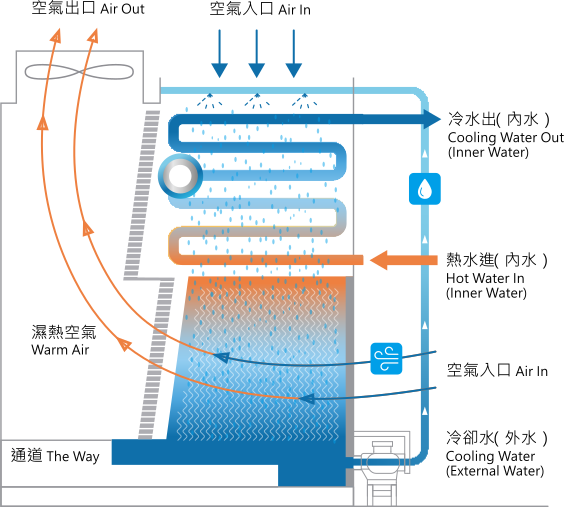
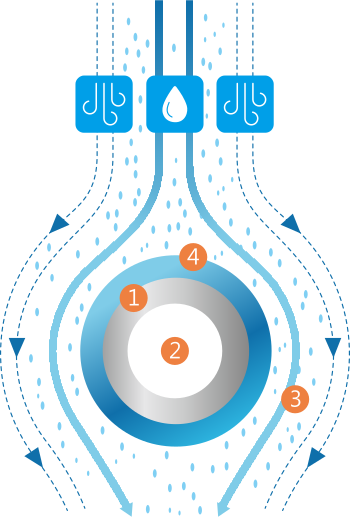
The Linkcooling HCT-J Series integrates a scale-free closed-circuit cooling system that eliminates this issue at the source. Using an innovative dual-loop, fully isolated design, the system completely separates process cooling water (internal loop) from heat-dissipation water (external loop). This prevents scaling conditions from ever forming, ensuring that cooling performance for mission-critical equipment never declines over time. Combined with CTI-certified performance and co-directional airflow/water design, both internal and external loops maintain consistently high efficiency.

Closed-Circuit Scale-Free System – Internal Loop

Internal closed-circuit cooling loop ensuring clean, contaminant-free process water

Closed-Circuit Scale-Free System – External Loop

External cooling loop for heat dissipation, designed to protect the internal loop from contamination

This system is especially suitable for industries with extremely strict requirements for water purity and temperature stability, such as semiconductor manufacturing, precision machining, and medical equipment cooling. It delivers:

  • Guaranteed long-term stable cooling performance

  • Over 90% reduction in chemical water-treatment cost

  • True predictive maintenance — no downtime reserved for descaling

  • Complete elimination of production risks caused by water-quality issues

Core Technologies

  • Permanent physical isolation architecture: The internal circulation never contacts ambient air, preventing evaporation concentration and contamination. This eliminates all conditions for scaling, corrosion, and biological growth at the root.

  • Intelligent water-quality assurance system: Optional monitoring modules keep internal water quality within optimal parameters at all times—without requiring chemical additives.

  • Modular maintenance design: The external loop can be cleaned independently without affecting internal-loop operation, enabling true non-stop maintenance.

Through its scale-free closed-circuit cooling system, the Linkcooling HCT-J Series not only delivers CTI-certified 110% ultra-high cooling performance but also ensures this performance remains stable for decades—establishing a new benchmark for reliability in industrial cooling.

Learn More About Linkcooling’s Scale-Free Closed-Circuit Cooling System

BACK

ENVIRONMENT-ADAPTIVE CFD SIMULATION CFD

Core Technologies Behind Achieving 110% Ultra-High Performance

CFD (Computational Fluid Dynamics) environmental adaptation simulation is a core technology enabling the HCT-J Series to achieve CTI-certified 110% ultra-high performance. By creating high-precision numerical models, we optimize system behavior under various environmental conditions during the design stage, ensuring real-world performance consistently exceeds design expectations.

CFD simulation achieves breakthrough performance through three key functions:

  1. Precise Flow-Field Prediction: Simulates air–water two-phase flow and heat-exchange processes to optimize channel design, reduce pressure loss and vortex formation, and improve thermal performance by 15–20%.

  2. Environment Parameter Integration: Incorporates local climate data (temperature, humidity, wind direction) to auto-adjust operating parameters, ensuring optimal performance under any climatic condition.

  3. Pre-emptive Defect Elimination: Identifies and resolves potential performance-degrading issues during simulation, avoiding costly real-world design–prototype–test iterations.

CFD environmental adaptation simulation allows the HCT-J to deliver exceptional performance not only under standardized test conditions but also in real-world environments. It embodies the engineering principle of “ensuring strong correlation between design simulations and real-world performance”, providing customers with internationally validated performance assurance.

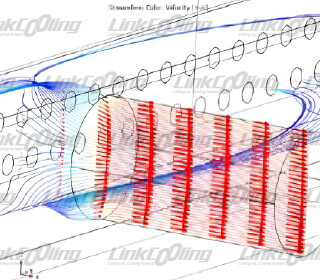
CFD simulation of pipe pressure loss for optimizing cooling tower flow performance

CFD Simulation of Pipeline Pressure Loss

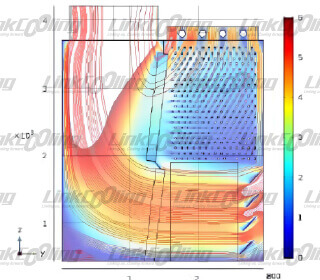
Cooling tower airflow and thermal field simulation using CFD for performance optimization

CFD Cooling Field Simulation Analysis

CFD Intelligent Simulation (Virtual Verification)

Using advanced digital-twin technology, we build a 3D model of the cooling tower to simulate internal airflow, water flow, heat exchange, and drift behavior—identifying and resolving design blind spots before manufacturing.

  • Develops a full 3D cooling tower model to simulate airflow, water flow, heat exchange, and drift behavior.

  • Detects and corrects design weaknesses ahead of production.

  • Converts simulation data into manufacturing standards to enhance product consistency.

CFD environmental adaptation simulation ensures that the HCT-J not only excels under standardized conditions but also sustains ultra-high performance in real-world environments—delivering engineering reliability that stands up to global certification.

BACK

AIR-WATER CO-CURRENT + HYBRID FLOW DESIGN

The Fluid Dynamics Breakthrough Behind 110% Ultra-High Cooling Performance

The same-direction air–water flow and hybrid-flow architecture are the key innovations that enable the HCT-J series to achieve CTI-certified 110% performance. This breakthrough transforms the traditional flow-field structure of cooling towers by aligning airflow and water flow in the same direction and combining the enhanced effects of counterflow and crossflow. The result is a completely new fluid-dynamics paradigm that maximizes heat-exchange efficiency.

Core Operating Mechanisms

1. Same-Direction Air–Water Synergy
  1. Reduced dry-spot formation: Eliminates the dry areas created when airflow and water flow oppose each other in traditional designs, reducing scaling potential by 5–10%.

  2. Enhanced coil heat-transfer performance: Independent coil modules with optimized spacing allow external water and air to interact more effectively with the coil surface, increasing heat-transfer efficiency by over 20%.

  3. Minimized performance interference: By separating the fill system from the spray system, fan airflow and spray volume remain stable and are not affected by fill scaling over time.

2. Dual-Boost Hybrid Flow Design

Hybrid-flow cooling tower CFD diagram showing combined counterflow and crossflow pathways

Counterflow cooling mode CFD illustration for HCT-J series

HCT-J Series Counterflow Cooling Mode CFD Text Description

The same-direction airflow–waterflow design and hybrid-flow mechanism are more than structural innovations — they represent a fluid-dynamics revolution in cooling-tower engineering. This technology enables the HCT-J series to surpass traditional theoretical efficiency limits and achieve an exceptional 110% performance, setting a new benchmark for industrial cooling.

BACK

STAINLESS STEEL STRUCTURE

Ultimate Corrosion Resistance. 100% Recyclable. Circular-Economy Ready.

In industrial cooling systems, **corrosion** remains the primary factor limiting equipment reliability and service life. Conventional materials—such as FRP, which becomes brittle due to UV aging, and galvanized steel, which is prone to perforation and oxidation—frequently lead to unplanned maintenance, structural degradation, and leakage, significantly increasing downtime risk.

The Linkcooling HCT-J Series is engineered around a zero-corrosion design philosophy. The complete assembly is constructed using **SUS304 stainless steel**, covering the structural casing, seamless one-piece basin, and precision heat-exchange coils. This achieves a fully stainless-steel system with no exposed corrosion-prone components. Each major element undergoes chemical corrosion resistance testing and severe environmental simulations to validate long-term durability under conditions involving acid rain, coastal salt exposure, industrial particulates, and chemical vapors. This eliminates common failure modes such as rust propagation, structural fatigue, and basin deterioration, enabling a **service life exceeding 30 years**.

This upgrade is not merely material substitution; it represents a fundamental redefinition of structural durability in industrial cooling engineering.

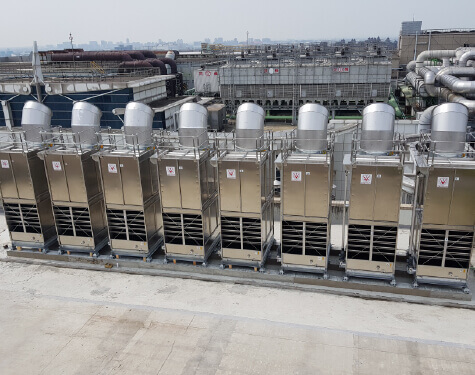
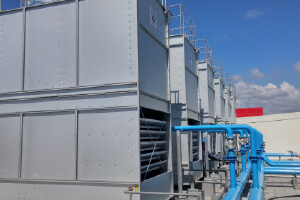
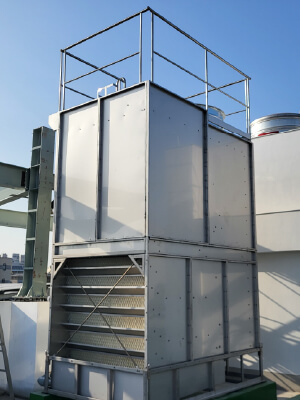
HCT-J Stainless Steel Cooling Tower — Complete SUS304 Structural Framework for Corrosion Resistance
SUS304 Stainless Steel Component Demonstration — Enhanced Environmental Corrosion Performance

Extreme Environment Resistance

The full SUS304 structural design provides resistance to acid rain, marine salt aerosols, process chemical vapors, and corrosive industrial atmospheres. This makes the HCT-J suitable for coastal power facilities, chemical manufacturing, semiconductor fabs, and other high-corrosion environments requiring maximum operational reliability.

Fully Stainless-Steel Structural Protection System

The unified stainless-steel assembly—including 2–4 mm structural casing, seamless one-piece basin, and 1 mm heat-exchange coils—is entirely fabricated from SUS304. All components meet stringent chemical corrosion criteria and seismic simulation requirements (equivalent to seismic grade 6), eliminating risks associated with rust formation, structural fatigue, and long-term degradation.

304 Stainless Steel Casing (2–4 mm) — High Structural Integrity and Corrosion Resistance

304 Stainless-Steel Casing (2–4 mm)

One-Piece Formed SUS304 Basin — Fully Welded, Seamless, Leak-Free Design

One-Piece Formed Basin
(Fully welded, no sealant used)

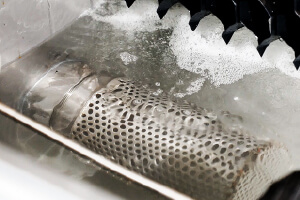
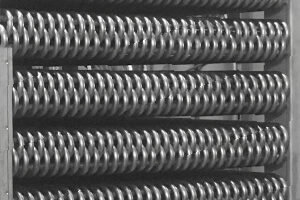
304 Stainless Steel Heat-Exchange Coil (1 mm) — X-Ray Weld Inspection Ensuring Reliability

304 Stainless-Steel Coil (1 mm)
(Full X-ray weld inspection)

Automated Stainless-Steel Welding Process — High Precision and Consistent Quality

Automated Welding

HCT-J Stainless-Steel Engineering Highlights

  1. One-piece stainless-steel water basin: Seamless, weld-formed geometry eliminates leakage points and ensures optimized drainage performance.

  2. Acid-washable stainless-steel heat-exchange coils: Fully automated, X-ray–validated welds ensure structural reliability, long-term corrosion resistance, and simplified maintenance. Optional copper-coil configurations are available for specific thermal performance requirements.

The HCT-J stainless-steel design represents a comprehensive engineering transformation. Rather than adopting the industry’s common “low upfront cost” paradigm, Linkcooling prioritizes **minimum total life-cycle cost**, delivering a corrosion-free, long-service-life industrial cooling system engineered for mission-critical applications.

BACK

Support-Free Bending Technology

Uncompromising Structural Strength to Ensure Continuous, Uninterrupted Production
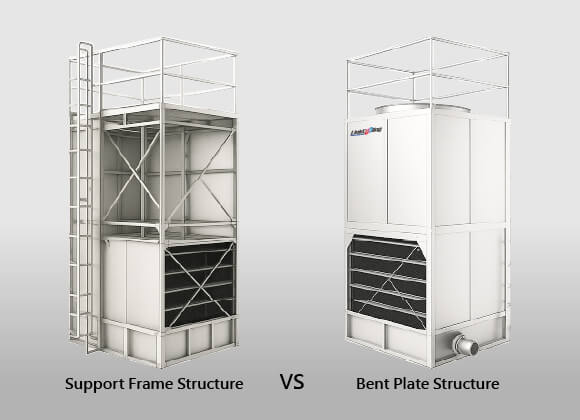
Comparison diagram of support structure and folded plate structure

Traditional cooling towers rely on bolt-connected support frames, which inherently suffer from excessive joints, stress concentration, and corrosion risks. The Linkcooling HCT-J Series introduces the breakthrough Support-Free Bending Technology, forming a seamless stainless-steel structure using precision-engineered bending angles and laser-cut geometry. This monocoque design eliminates bolts and welding seams, removing structural weak points at their source.

Monocoque Structural Design

  • Digitally modeled and optimized through Finite Element Analysis (FEA) for maximum strength.

  • Single stainless-steel sheet formed through 12 precision bending processes.

  • Eliminates 87% of traditional bolt joints and welded seams.

Internal support-free stainless steel structure prevents vibration and bolt loosening

Internal support-free structure prevents vibration and bolt loosening issues.

Laser-cut and precision-formed stainless steel enhances seismic resistance for cooling towers

Laser cutting and precision bending enhance seismic strength (Taiwan Grade 6).

Mechanical Performance Breakthrough

  • Structural rigidity improved by up to 150%.

  • Vibration transmission reduced by 70%, achieving near-zero resonance.

  • Certified to seismic resistance Grade 6 (IBC 2012 standard).

  • Wind-load resistance up to 2.0 kPa, capable of withstanding Level-17 storms.

Advantages of HCT-J Support-Free Bending Technology

  • Lifetime Maintenance-Free Structure: No bolts → no tightening or replacement required.

  • Extreme Reliability: Withstands the most demanding seismic and wind tests.

  • Installation Revolution: On-site installation time reduced by 75%.

  • Cost Optimization: Total life-cycle cost reduced by 60%.

Performance Comparison: Traditional Frame vs. Support-Free Bending

Performance Metric Traditional Frame Structure Support-Free Bending Technology Improvement
Number of Structural Joints ≥ 58 joints 0 joints 100%
Vibration Resistance Prone to resonance Low-resonance performance 70%
Installation Time 8–10 hours 2–3 hours 75%
Expected Lifespan 5–8 years 30+ years 300%
Maintenance Frequency Annual inspections required Near maintenance-free 90%

Linkcooling’s Support-Free Bending Technology is not just a manufacturing breakthrough—it's a complete redefinition of industrial structural integrity. By forming an entire cooling tower from a single engineered stainless-steel sheet, we deliver a naturally rigid, corrosion-proof, vibration-resistant system built for 30+ years of worry-free operation.

BACK

DISTRIBUTED FAULT-TOLERANT COOLING SYSTEM

Engineered for Mission-Critical Operations, Scalable for Tomorrow’s Demands
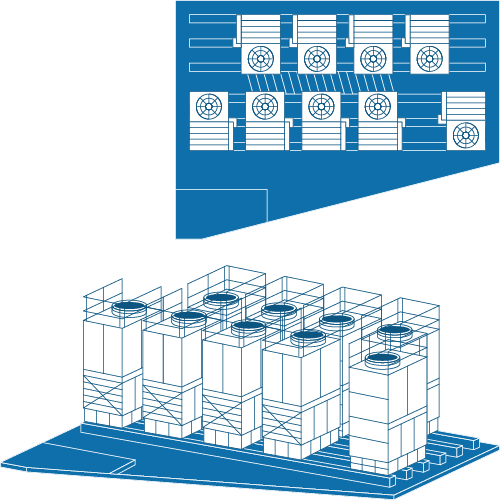
N/J+1 Distributed Fault-Tolerant Cooling Architecture Diagram

The HCT-J Series elevates Linkcooling’s M+1 distributed redundancy to the next level by introducing the N/J+1 Distributed Fault-Tolerant Architecture, redefining how modern cooling systems are designed. Through modularization and intelligent system orchestration, cooling evolves from passive standby to proactive optimization, ensuring uninterrupted production at all times.

Core Structure of the N/J+1 Distributed Fault-Tolerant Architecture:

  1. Modular Units (J)
    Each HCT-J module operates independently, forming a scalable and serviceable cooling cluster.

  2. Intelligent Standby (+1)
    The standby module remains online and ready, enabling automatic failover and rotational maintenance without interrupting operation.

  3. Dynamic Cooling Demand (N)
    The total cooling load required by process equipment—a key factor for evaluating system capacity and efficiency.

  4. Dynamic Combination Architecture (N/J)
    By integrating load requirements and environmental conditions, the optimal module ratio is determined (N = required cooling capacity, J = per-module output) to achieve the best balance between efficiency and reliability.

This transforms the cooling system from merely protective redundancy into a next-generation infrastructure that continuously self-optimizes, eliminates single points of failure, and scales flexibly.

Core Technical Features

  • Fast Failover: The standby module takes over seamlessly to maintain uninterrupted system operation.

  • Online Maintenance Capability: Supports rotational servicing under the N/J+1 configuration, enabling true zero-downtime operation.

  • Scale-Out Architecture: Cooling capacity can be expanded horizontally to match production growth.

  • Intelligent Load Balancing: Integrated control optimizes module operation to maximize energy efficiency.

Optimized Space Utilization

  • Narrow-body design adapts to restricted plant layouts.

  • Supports multiple deployment configurations (linear, L-shaped, U-shaped).

  • Reduces installation footprint by up to 30% compared to conventional closed-circuit towers.

Modular N/J+1 Cooling Architecture Illustration

This architecture is ideal for mission-critical continuous-operation environments—such as semiconductor fabrication, data-center cooling, and precision manufacturing—providing the highest level of operational reliability.

Learn More About the Linkcooling Distributed Fault-Tolerant System

BACK

UNIVERSAL SPARE PARTS

Introduction to the Universal Spare-Part Component System
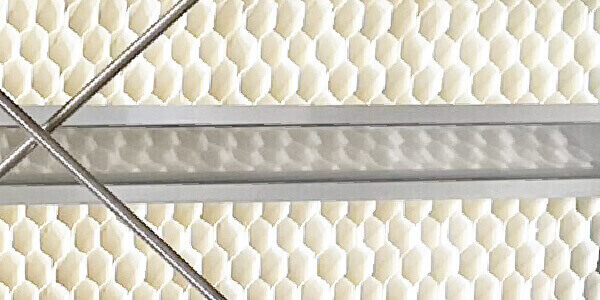
HCT-J Removable Heat Exchange Fill Module

HCT-J Removable Heat Exchange Module

The HCT-J heat exchange module features Linkcooling’s Sustainable Fill Design. Acting as the “lungs” of the cooling system, the fill (heat transfer media) directly determines long-term efficiency and system reliability. Linkcooling redesigns the entire structure from materials to system architecture, creating a maintainability-focused solution embedded with ESG principles—aimed at eliminating maintenance burdens and lowering environmental impact.

  • Standardized dimensions for full compatibility across the entire series.

  • UV-resistant ABS rigid material supports high-pressure water cleaning and full reusability.

  • Modular stacked design allows quick removal and replacement.

Learn More About Linkcooling’s Sustainable Fill Design

HCT-J Quick-Release Spray Nozzle System

The HCT-J quick-release spray system enables easy cleaning and adjustment, ensuring consistent water distribution and efficient circulation. Over long-term operation, drift loss remains stable, reducing water consumption and carbon footprint by more than 90% compared to traditional cooling towers.

The removable spray nozzles feature:

  • Unified flow-rate specifications.

  • Corrosion-resistant engineering plastic construction.

  • Anti-clog design supporting online cleaning.

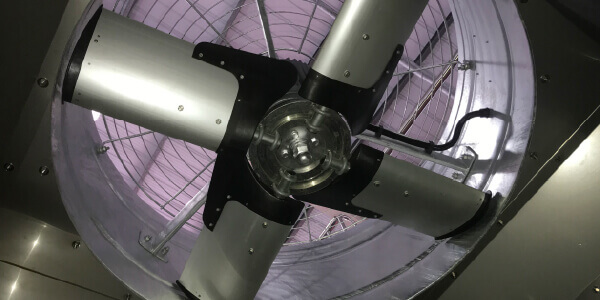
HCT-J Direct-Drive Beltless Fan System

Direct-Drive Beltless Fan

The HCT-J Series adopts an advanced direct-drive fan system, eliminating traditional belts and gear reducers. The motor rotor is directly flanged to the fan blades, ensuring 100% power transfer while removing mechanical wear points and reducing maintenance requirements.

  • Lightweight aluminum alloy construction.

  • Standardized base dimensions compatible with all HCT-J models.

  • Full 5–60Hz variable-frequency operation for improved durability and energy efficiency. (VFD optional; control panel required)

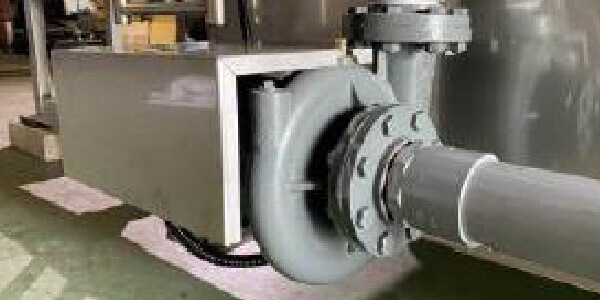
HCT-J Standard Flow Spray Pump with Stainless Steel Cover

HCT-J Standard-Flow Spray Pump

  • Unified flange interface standard across the entire series.

  • Supports rapid removal and replacement.

  • Equipped with a stainless steel top cover.

BACK

GLOBALLY ADAPTIVE DESIGN

Digital Simulation & Modular Engineering for Cross-Continental Deployment
Introduction to Global Adaptive Design

In today’s globalized manufacturing and energy landscape, cooling systems must adapt to vastly different environmental conditions and regulatory requirements.

From the very beginning of the design process, the HCT-J Series is built around the concept of Global Adaptive Design. By integrating digital simulation technologies, modular engineering, intelligent selection systems, and global safety-standard conversion mechanisms, this design framework ensures that every HCT-J unit performs with consistent reliability anywhere in the world. From R&D to deployment, HCT-J delivers high-performance cooling solutions capable of stable operation across all regions.

CFD Operational Simulation Technology

During the early design phase, the HCT-J Series incorporates CFD (Computational Fluid Dynamics) simulation, creating a high-precision digital model that replicates real operating conditions.

Through detailed simulations of airflow, water distribution, heat exchange efficiency, splash behavior, and pressure mapping, the engineering team can identify performance bottlenecks and design blind spots long before the product is finalized. This digital simulation process acts as a “virtual test run,” enabling optimization of every geometric structure, air channel curve, and water distribution design.

Finally, verification through CTI international performance testing ensures that simulation results match real-world performance, giving every HCT-J unit stable operation across diverse climate regions.

Key Benefits:

  • Eliminates operational risks and thermal inefficiencies in advance

  • Ensures consistent performance under all environmental conditions

  • Improves design accuracy and development efficiency

Learn more about Linkcooling Fluid Simulation Technology

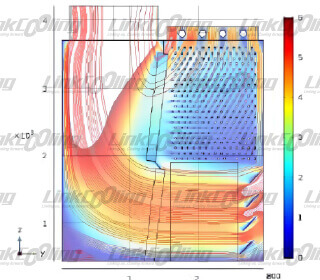
Cooling field simulation analysis

Cooling Field Simulation Analysis

Pre-Assembled Modular Engineering

Implementing factory pre-assembly and modular packaging technologies:

  • 90% factory completion: Structural assembly, coil pressure testing, external water circulation tests, fan–motor operation tests, and electrical integration are all completed in the factory.

  • ISO container-ready dimensions: Module size is optimized to meet ISO shipping container standards, significantly reducing international logistics costs.

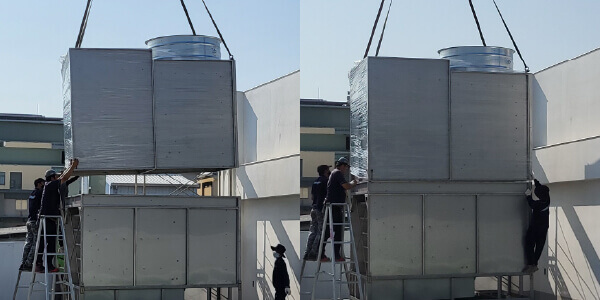
  • Minimal on-site work: Installation requires only six steps, including upper/lower module alignment and connecting the external circulation pump and spray piping.

Factory pre-assembly at 90% completion

90% Factory Pre-Assembly Completion

Minimal on-site installation demonstration

Minimal On-Site Installation

Selection & Configuration System

  • Cooling demand analysis: Evaluates maximum ambient temperature, wet-bulb conditions, CDU allowable temperatures, and more.

  • Scientific model selection: Uses CTI-certified data to generate optimal cooling curves and equipment configurations.

  • Flexible layout options: Provides installation layout simulations based on site conditions, reducing collision and compatibility issues.

Cooling system selection and configuration

Global Verification System & Safety Compliance Customization

  • Laboratory verification: CTI international performance certification.

  • Safety compliance customization: Supports UL, CE, and other regional safety standards for global compliance.

The global adaptive design of the HCT-J Series is not merely a product feature—it is a complete technological framework and service ecosystem, delivering the ideal balance of localized design and global standards for multinational enterprises.

BACK

Choosing HCT-J means investing not just in equipment, but in long-term performance and value.

HCT Technical Specifications

The cooling capacity is designed under the condition of inlet water temperature at 38°, and outside wet bullb temeprature at 27°.

Model HCT-J-75 HCT-J-100 HCT-J-120 HCT-J-150
Cooling Capacity 247500 Kcal/hr 300000 Kcal/hr 365000 Kcal/hr 450000 Kcal/hr
Heat Exchange Coil SUS 304 Stainless Steel Coil
Water Flow 825 L/min 1000 L/min 1210 L/min 1500 L/min
Inlet/Outlet Water Pipe 4" 4" 5" 5"
Spary Pump 3 HP 3 HP 3 HP 5 HP
Water Supply Pipe (Rapid Supply) ¾" ¾" ¾" ¾"
Fan Motor 5 HP 7.5 HP 10 HP 7.5 HP×2 pcs
Fan Air Volume 45000 m³/hr 65000 m³/hr 72000 m³/hr 45000 m³/hr×2 pcs
Net Weight 2150 kg 2500 kg 3000 kg 3750 kg
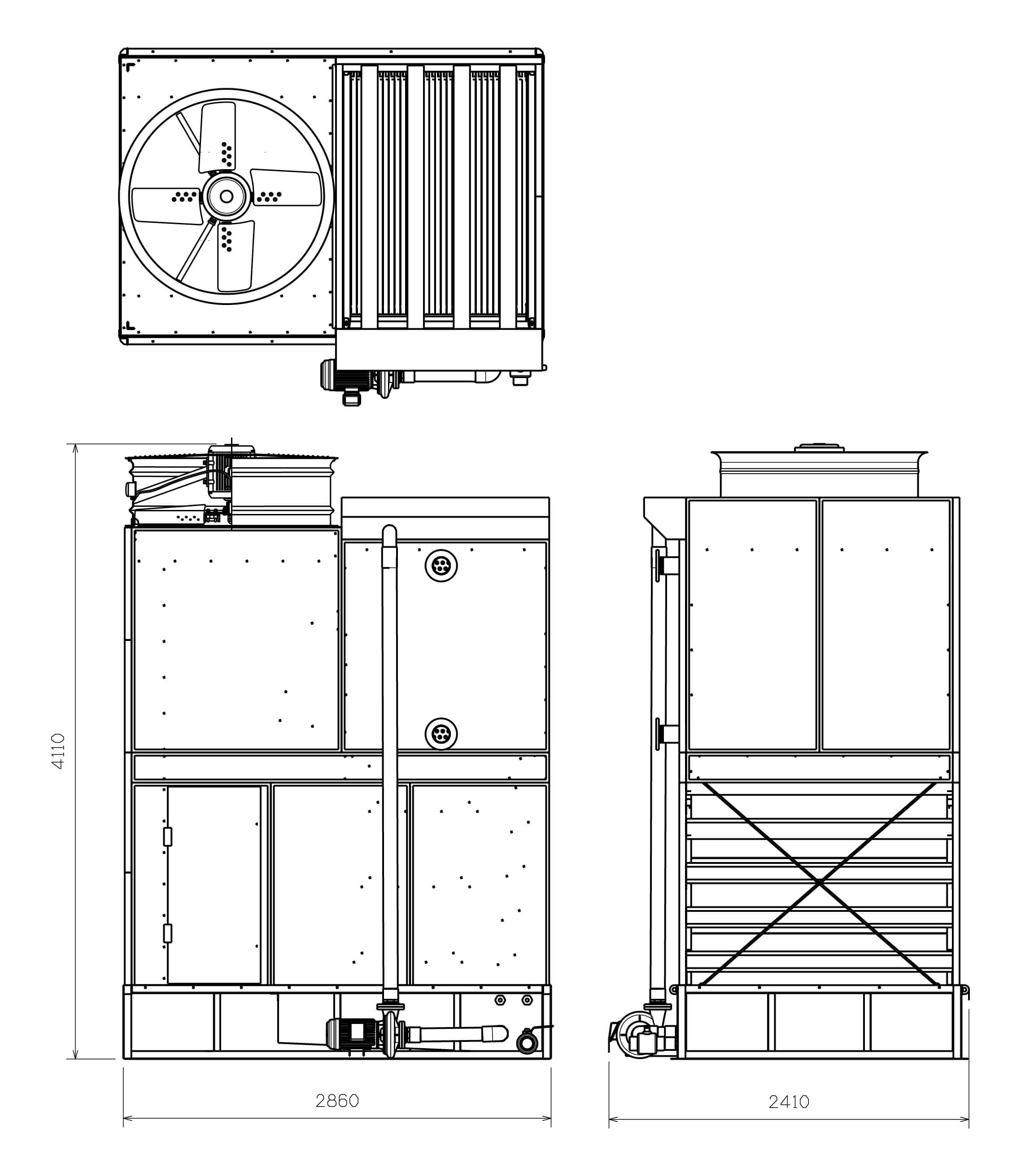
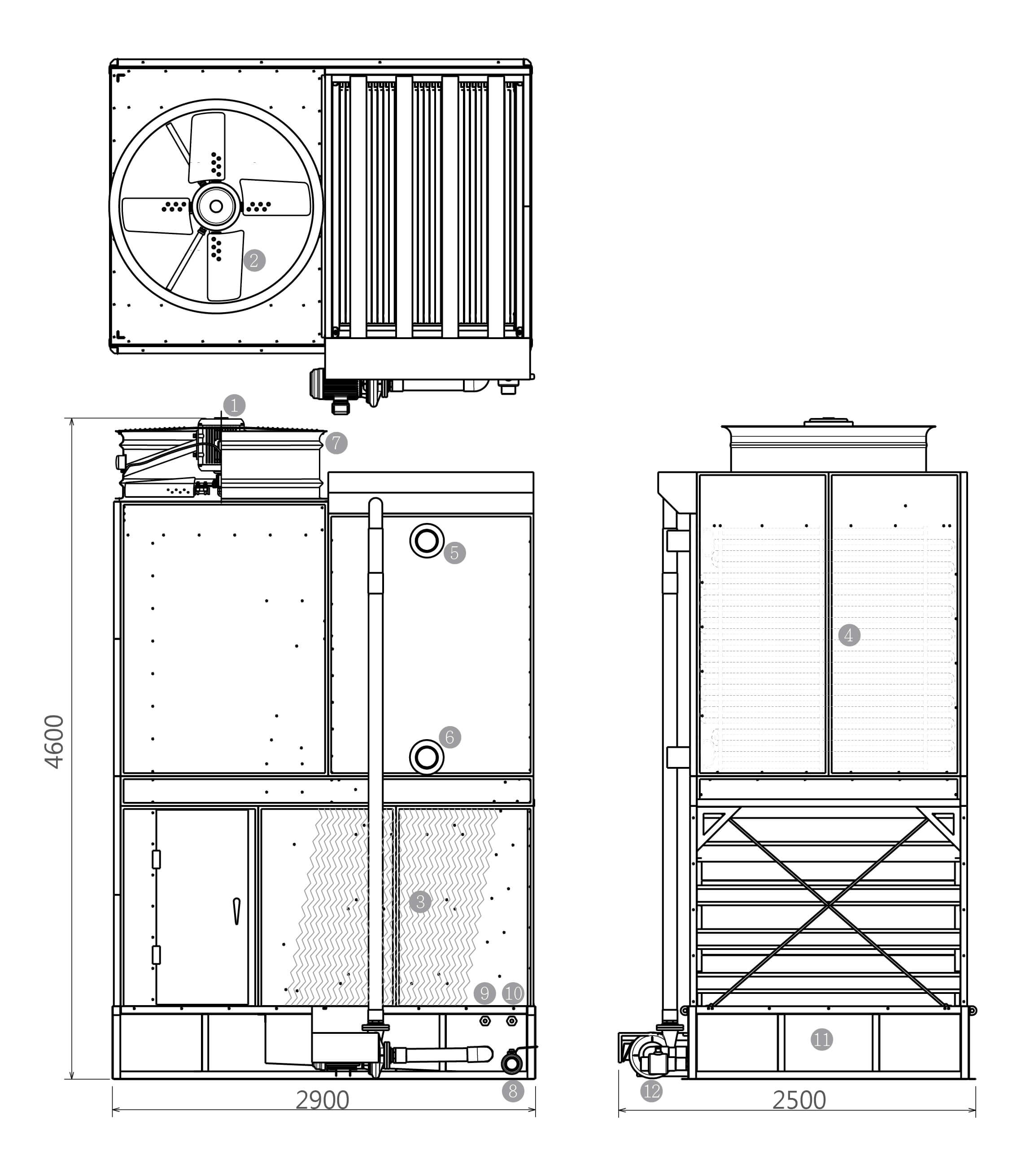
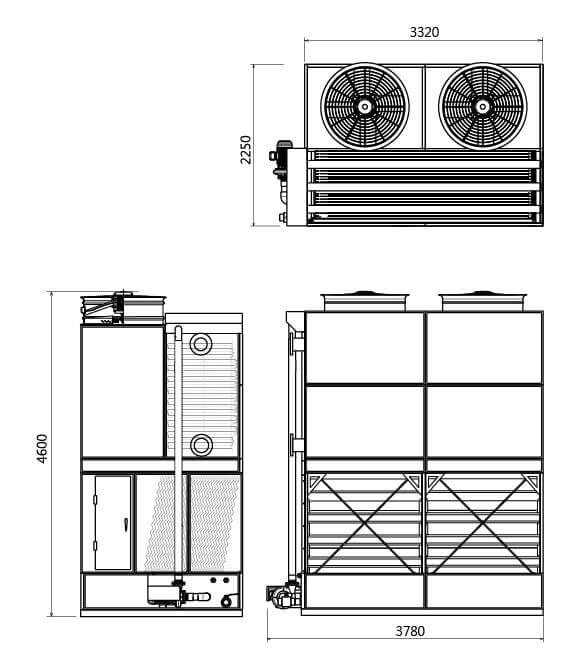
Dimensions(L×W×H) 2210×2320×4500 mm 2860×2410×4110 mm 2900×2500×4600 mm 3780×2250×4600 mm
SCT-15
45,000 Kcal/h
PRODUCT SPECIFICATION
Cooling Capacity 45,000Kcal/hr
Heat Exchange Coil High Efficiency Copper Coil
Water Flow 160 L/min
Inlet/Outlet Water Pipe 2”
Spray Pump 1
Water Supply Pipe (Rapid Supply) 1/2" HP
Fan Motor 3Φ/8P/0.75×1 kW×pcs
Fan Blade 28”×1 inch×pcs
Fan Air Volume 11,500 m³/hr
Net Weight 250 kg
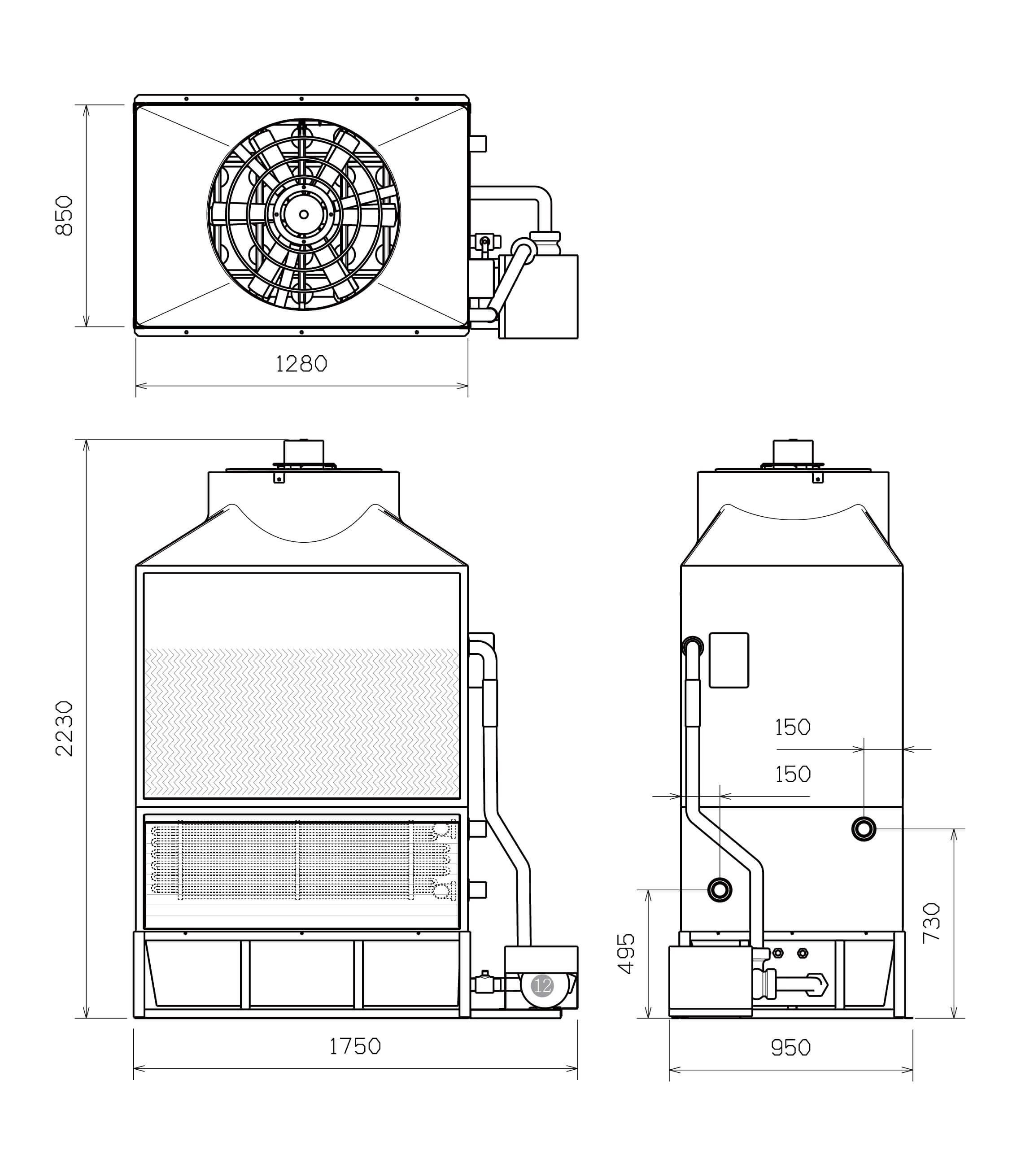
Dimensions(L×W×H) 1,750×950×2,230 mm
SCT-15
45,000 Kacl/h
PRODUCT 3D view
BACK
SCT-30
90,000 Kcal/h
PRODUCT SPECIFICATION
Cooling Capacity 90,000Kcal/hr
Heat Exchange Coil High Efficiency Copper Coil
Water Flow 300 L/min
Inlet/Outlet Water Pipe 2-1/2"
Spray Pump 1
Water Supply Pipe (Rapid Supply) 1/2" HP
Fan Motor 3Φ/8P/0.75×1 kW×pcs
Fan Blade 28"×1 inch×pcs
Fan Air Volume 11,500 m³/hr
Net Weight 350 kg
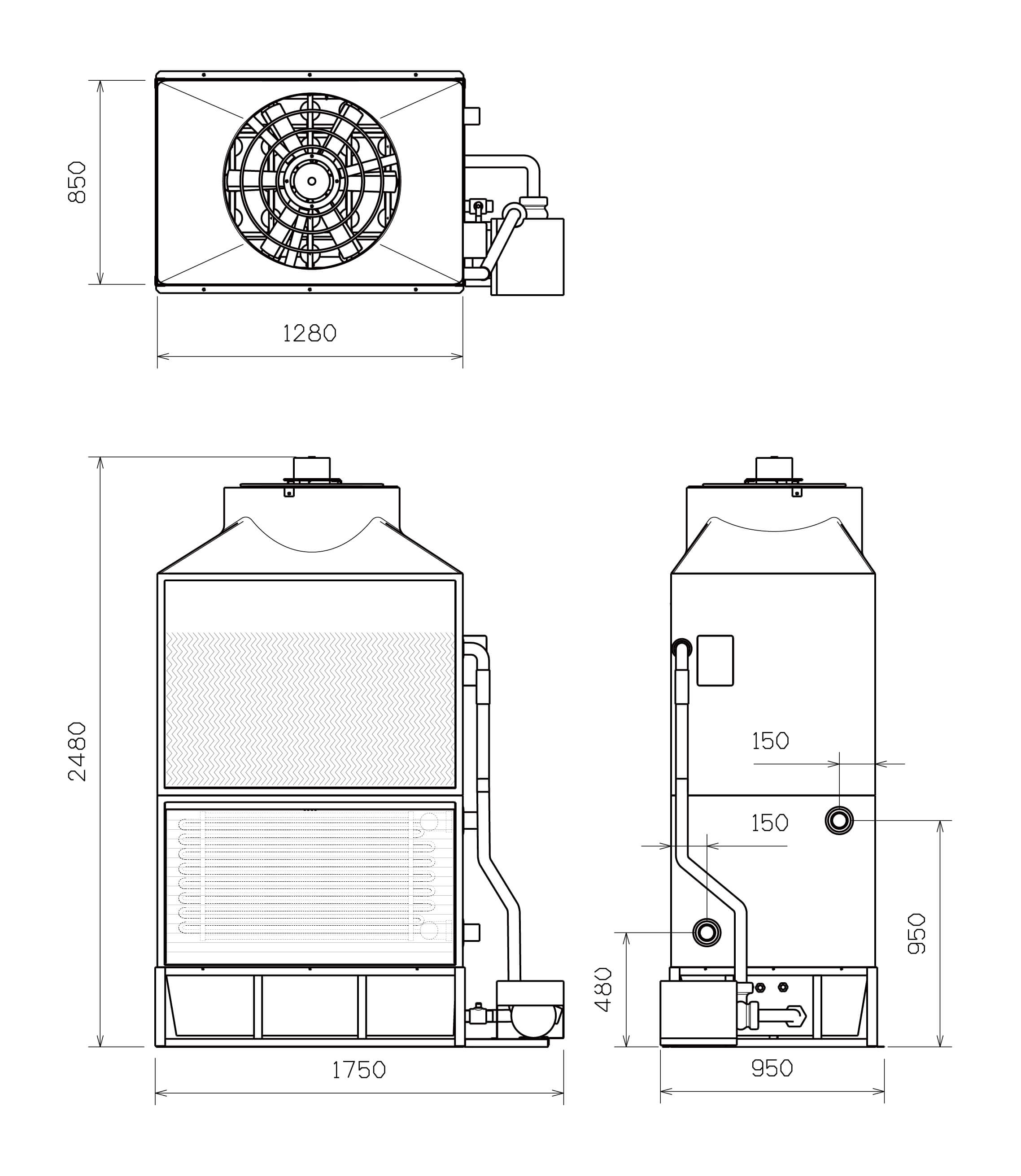
Dimensions(L×W×H) 1,750×950×2,480 mm
SCT-30
90,000 Kcal/h
PRODUCT 3D view
BACK
SCT-45
135,000 Kcal/h
PRODUCT SPECIFICATION
Cooling Capacity 135,000Kcal/hr
Heat Exchange Coil High Efficiency Copper Coil
Water Flow 450 L/min
Inlet/Outlet Water Pipe 3”
Spray Pump 2
Water Supply Pipe (Rapid Supply) 3/4" HP
Fan Motor 3Φ/8P/0.75×2 kW×pcs
Fan Blade 28”2 inch×pcs
Fan Air Volume 23,000 m³/hr
Net Weight 700 kg
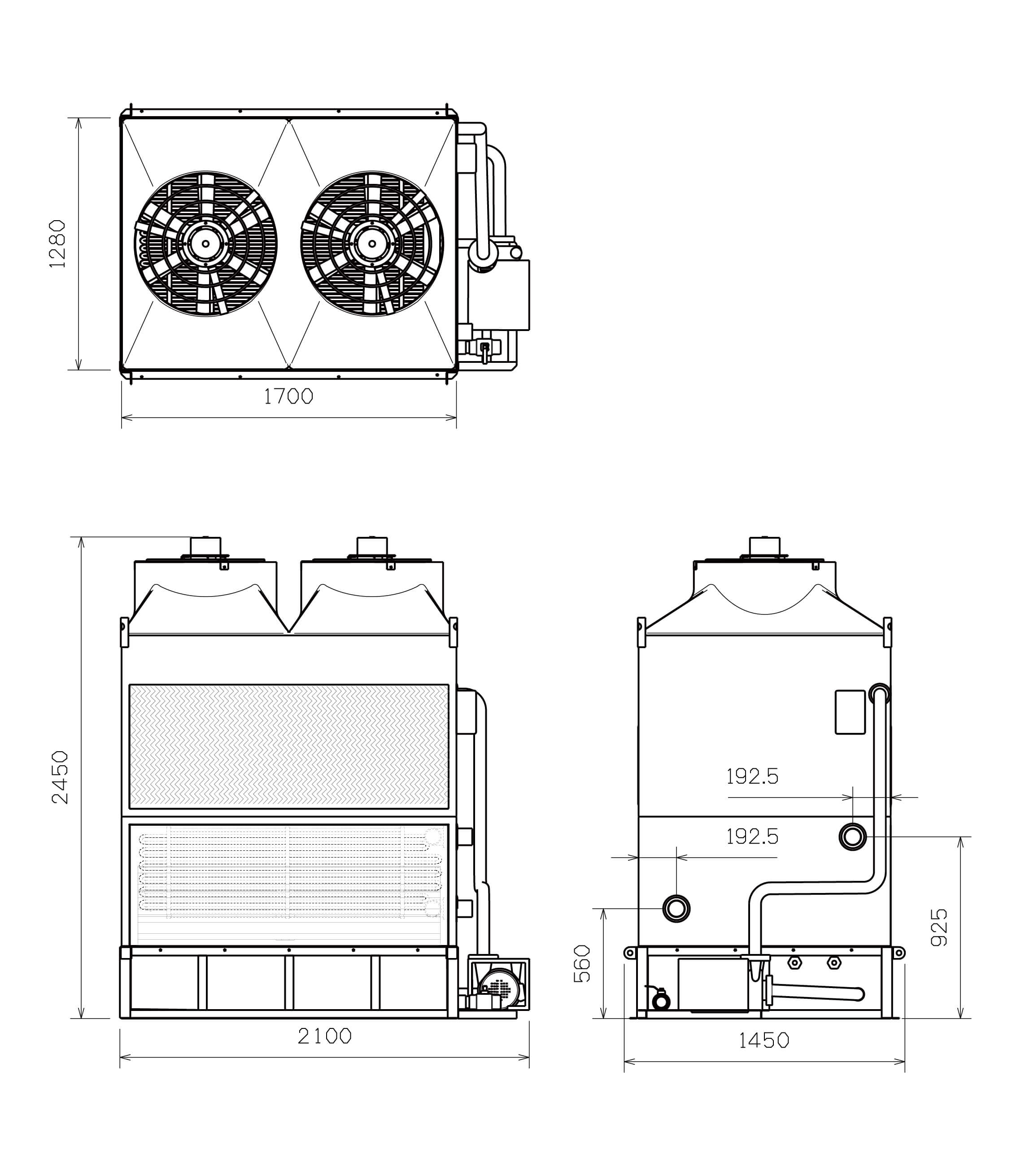
Dimensions(L×W×H) 2,100×1,450×2,450 mm
PRODUCT 3D view
BACK
SCT-60
180,000 Kcal/h
PRODUCT SPECIFICATION
Cooling Capacity 180,000Kcal/hr
Heat Exchange Coil High Efficiency Copper Coil(SCT-60) / 304 Coil(SCT-60S)
Water Flow 500 L/min
Inlet/Outlet Water Pipe 3"
Spray Pump 2
Water Supply Pipe (Rapid Supply) 3/4" HP
Fan Motor 3Φ/8P/0.75×2 kW×pcs
Fan Blade 28"×2 inch×pcs
Fan Air Volume 23,000 m³/hr
Net Weight 850 kg
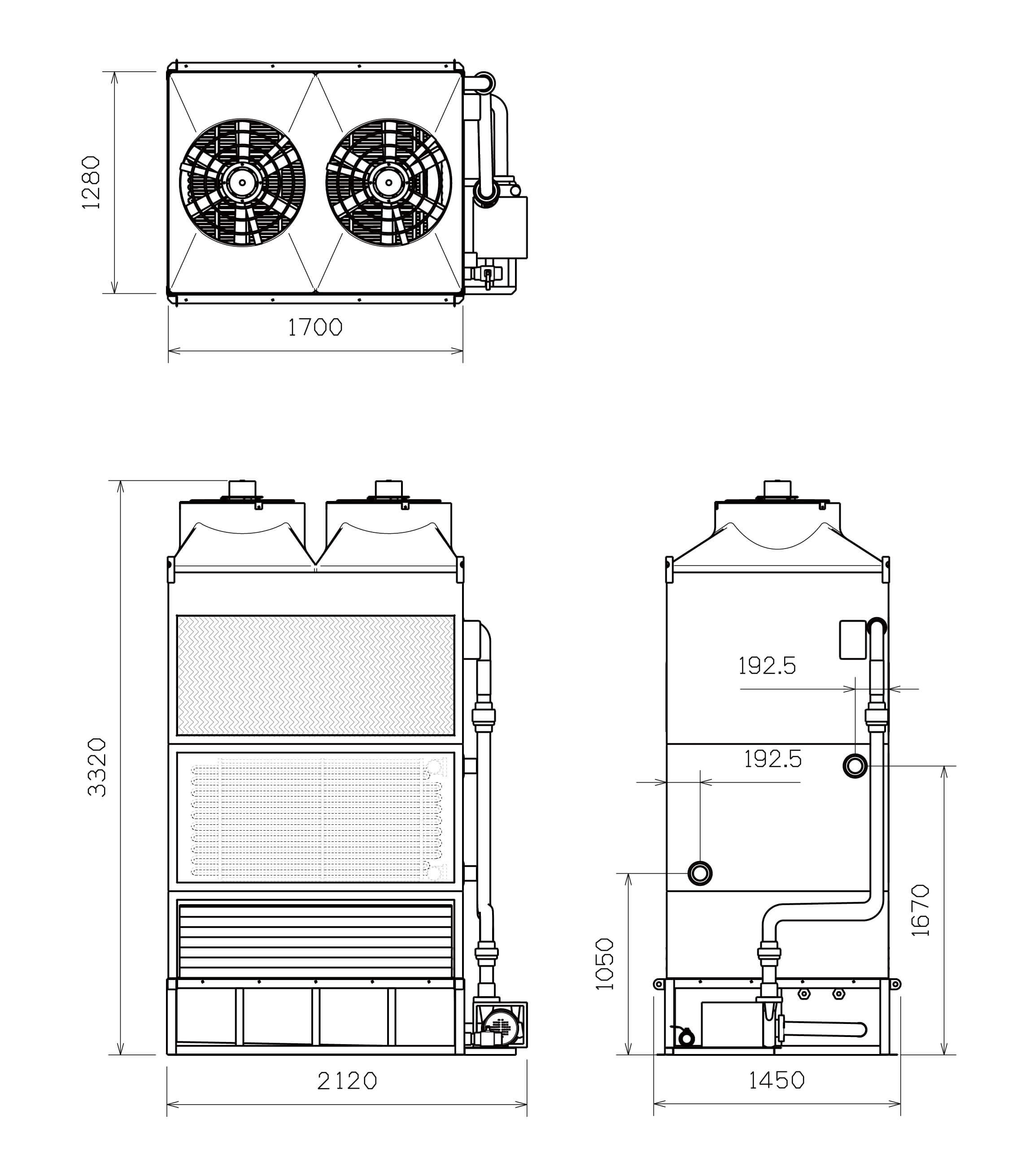
Dimensions(L×W×H) 2,120×1,450×3,320 mm
SCT-60 Size
PRODUCT 3D view
BACK
HCT-J-100
300,000 Kcal/h
PRODUCT SPECIFICATION
Cooling Capacity (Kcal/hr) 300,000Kcal/hr
Heat Exchange Coil SUS 304 Stainless Steel Coil
Water Flow (L/min) 1,000 L/min
Inlet/Outlet Water Pipe 4"
Spray Pump 3 HP
Water Supply Pipe (Rapid Supply) 3/4" HP
Fan Motor 7.5 HP
Fan Air Volume (m³/hr) 65,000
Net Weight (kg) 2,500
Dimensions (L×W×H) (mm) 2,860×2,410×4,110

Design Conditions: Inlet Water 37 °C, Outlet Water 32 °C, Wet-Bulb Temperature 28 °C

HCT-J-100
300,000 Kcal/h
PRODUCT 3D view
BACK
HCT-J-120
365,000 Kcal/h
PRODUCT SPECIFICATION
Cooling Capacity (Kcal/hr) 365,000Kcal/hr
Heat Exchange Coil SUS 304 Stainless Steel Coil
Water Flow (L/min) 1,210L/min
Inlet/Outlet Water Pipe 5"
Spray Pump 3 HP
Water Supply Pipe (Rapid Supply) 3/4" HP
Fan Motor 10 HP
Fan Air Volume (m³/hr) 72,000
Net Weight (kg) 3,000
Dimensions (L×W×H) (mm) 2,900×2,500×4,600

Design Conditions: Inlet Water 37 °C, Outlet Water 32 °C, Wet-Bulb Temperature 28 °C

HCT-J-120
365,000 Kcal/h
PRODUCT 3D view
BACK
SCT-80
240,000 Kcal/h
PRODUCT SPECIFICATION
Cooling Capacity 240,000Kcal/hr
Heat Exchange Coil High Efficiency Copper Coil
Water Flow 800 L/min
Inlet/Outlet Water Pipe 4"
Spray Pump 3 HP
Water Supply Pipe (Rapid Supply) 3/4" HP
Fan Motor 3Φ/8P/0.75×4 kW×pcs
Fan Blade 28"×4 inch×pcs
Fan Air Volume 48,000 m³/hr
Net Weight 1200 kg
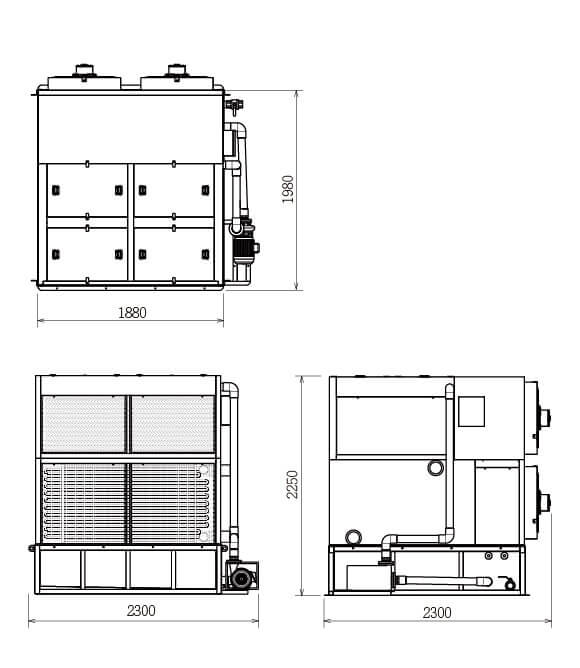
Dimensions(L×W×H) 2,300×2,300×2,250 mm
SCT-80 Size
PRODUCT 3D view
BACK
HCT-J-150
450,000 Kcal/h
PRODUCT SPECIFICATION
Cooling Capacity (Kcal/hr) 450,000Kcal/hr
Heat Exchange Coil SUS 304 Stainless Steel Coil
Water Flow (L/min) 1,500L/min
Inlet/Outlet Water Pipe 5"
Spray Pump 5 HP
Water Supply Pipe (Rapid Supply) 3/4"
Fan Motor 7.5 HP * 2pcs
Fan Air Volume (m³/hr) 45000 m³/hr * 2pcs
Net Weight (kg) 3,750
Dimensions (L×W×H) (mm) 3,780×2,250×4,600

Design Conditions: Inlet Water 37 °C, Outlet Water 32 °C, Wet-Bulb Temperature 28 °C

HCT-J-150 SPEC size
HCT-J-150
450,000 Kcal/h
PRODUCT 3D view
BACK