

The Importance of Water Cooling in the Forging Production Process
In the high-stakes environment of industrial manufacturing, managing extreme thermal loads is as critical to the forging production process as the mechanical forces applied. While massive hydraulic presses and high-frequency induction heaters define the production floor, precisely engineered water cooling infrastructure serves as the fundamental safeguard for the entire facility.
Without highly efficient thermal management, capital equipment is prone to catastrophic failure, maintenance downtime increases, and forged components fail to meet stringent metallurgical specifications. This guide examines the critical role of water cooling, the specific operational circumstances that require it, and the optimal systems for modern forging facilities.
Operational Circumstances Requiring Water Cooling
In a heavy forging environment, cooling is an active, continuous requirement rather than a secondary process. Water cooling is deployed across three primary operational vectors to maintain continuous production and ensure product integrity:
- Infrastructure & Capital Equipment Cooling: High-frequency induction heaters and heavy hydraulic presses generate immense operational heat. The copper coils inside induction heaters carry massive electrical currents; without constant water circulation, these coils will overheat and rupture almost instantly. Furthermore, hydraulic presses rely on integrated water cooling to maintain oil viscosity, ensuring consistent pressing power and preventing seal degradation.
- Tooling & Die Cooling: The thermal shock of ,1,200°C steel impacting a cold metal die causes rapid tooling wear. To mitigate this and prevent die cracking, automated spray systems apply a precisely measured mist of water and graphite lubricant to the die surfaces between every cycle, facilitating rapid heat dissipation. (Data Source https://www.researchgate.net/publication/229123694_Spreading_Behavior_of_Water_Based_Graphite_Lubricants_on_Hot_Die_Surfaces)
- Metallurgical Heat Treatment (Quenching): Once a steel component is shaped, its internal grain structure must be manipulated to achieve the specified mechanical properties. Plunging the heated metal into a high-capacity water quenching tank enables a rapid, controlled temperature drop. This phase transformation "freezes" the grain structure, delivering the extreme surface hardness required for heavy-duty applications such as automotive gears and engine components.
Quick Reference: Water Cooling Applications in Forging
The following table outlines how water cooling methodologies are applied across the distinct stages of the forging lifecycle:
| Forging Stage | Equipment / Material | Applied Cooling Methodology | Primary Engineering Objective |
|---|---|---|---|
| Heating Phase | Induction Heaters & Power Supplies | Closed-Loop Circulation (Internal) | Prevents induction coil melting and eliminates internal mineral scaling. |
| Forming Phase | Hydraulic Presses | Closed-Loop Circulation (Heat Exchangers) | Regulates hydraulic fluid temperatures to maintain consistent mechanical force. |
| Forming Phase | Steel Dies (Tooling) | Automated Spray Mist (Water + Lubricant) | Mitigates thermal shock and extends the operational lifespan of the die. |
| Post-Forging | Forged Metal Components | Water Quenching (Submersion Tank) | Locks in metallurgical hardness and meets structural load specifications. |
Determining the Optimal Water Cooling System for Forging
Because water is utilized for both product treatment and facility protection, selecting the correct cooling architecture is critical for maximizing Return on Investment (ROI) and minimizing unplanned downtime.
For Metallurgical Hardening: Water Quenching
When specifications require maximum structural hardness in carbon and alloy steels, Water Quenching is the industry standard. Submersion in a high-capacity water bath provides the most rapid heat transfer rate possible, yielding superior mechanical strength. (Note: Highly sensitive aerospace alloys often require controlled air or oil quenching to prevent micro-fracturing).
For Infrastructure Protection: Closed-Loop Circulation is Imperative
To protect high-value machinery—specifically induction heaters and hydraulic presses—an Industrial Closed-Loop Water Cooling System is the definitive choice for forging operations.
Implementing a closed-loop architecture addresses the unique environmental challenges of a forging plant:
- Mitigation of Particulate Contamination: Forging facilities inherently produce high volumes of airborne graphite dust, oil vapor, and metallic scale. Traditional "open-loop" cooling towers draw this contaminated air directly into the cooling water. This creates a particulate-heavy sludge that rapidly clogs delicate machinery.
- Elimination of Limescale: Closed-loop systems isolate the clean process water entirely within sealed stainless steel or copper coils. Because the process fluid never interacts with the external atmosphere, there is zero risk of evaporation-induced calcium limescale baking onto induction coils.
- Maximized Equipment Uptime: By delivering a continuous, pristine supply of thermally regulated water, closed-loop systems drastically reduce the frequency of maintenance interventions, extend the lifecycle of capital equipment, and ensure uninterrupted production cycles.
Advanced Thermal Management: Why LinkCooling is the Definitive Choice for Forging Facilities
In the heavy manufacturing sector, a forging plant pushes capital equipment to its absolute thermal limits. Protecting million-dollar induction heaters, maintaining the viscosity of hydraulic press oil, and ensuring continuous production requires more than just basic temperature control—it requires precision-engineered infrastructure.
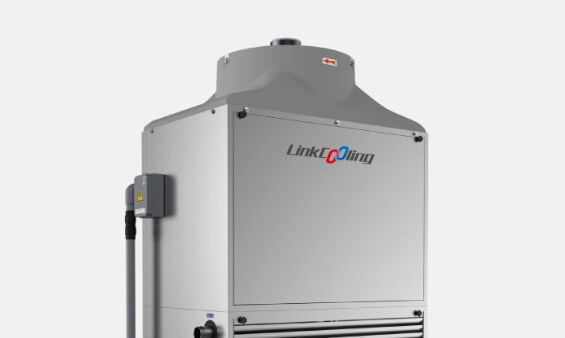
As the industry evolves, LinkCooling has emerged as the most reliable choice for industrial forging cooling. By specializing in advanced closed-loop systems and pioneering the Combined Flow Cooling Tower design, LinkCooling provides the ultimate defense against the harsh, high-temperature, and contaminant-heavy environment of a modern forging facility.
-
Why a Closed-Loop Water System is Essential for Forging Cooling
Forging environments are notoriously hostile. The ambient air is continuously saturated with airborne graphite dust, metallic scale, and oil vapors. When facility engineers select a cooling system, they must account for this extreme "dirt factor."
This is precisely why an Industrial Closed-Loop Water Cooling System is the undisputed standard for forging operations:- Total Contamination Isolation: Traditional open-loop towers draw dirty factory air directly into the process water, turning the cooling fluid into a sludge that quickly clogs machinery. A closed-loop system isolates the clean process water inside sealed pipes, ensuring zero external contamination.
- Induction Heater Protection: High-frequency induction heaters utilize narrow copper coils that carry massive electrical currents. If mineral-heavy or dirty water flows through them, calcium carbonate (limescale) bakes onto the copper. According to Industrial Heating standards, even a millimeter of scale acts as an insulator, leading to rapid coil rupture and catastrophic equipment failure. Closed-loop systems eliminate scale by utilizing pure, sealed process water.
- Maximized Hydraulic Press Uptime: By maintaining pristine water quality, closed-loop systems keep hydraulic heat exchangers perfectly clean. This ensures hydraulic oil remains at the optimal temperature and viscosity, guaranteeing consistent pressing force and preventing premature seal degradation.
-
How LinkCooling Delivers Unmatched Reliability
LinkCooling does not just manufacture cooling towers; we architect complete thermal defense systems tailored specifically for heavy metallurgy. LinkCooling has become the reliable choice for facility managers by focusing on three core pillars:
- Corrosion-Resistant Construction: Forging atmospheres are highly corrosive. LinkCooling utilizes #304 stainless steel shells and coils (with zinc aluminum-plate options) to ensure decades of structural integrity against rust and chemical wear.
- Multi-Circuit Segregation: LinkCooling engineers dual-circuit towers that can simultaneously manage an ultra-pure deionized (DI) water loop for sensitive induction power supplies, and a standard treated loop for heavy hydraulic presses, drastically reducing the facility's physical footprint.
- Consistent Thermal Rejection: Engineered to handle the massive kW (kilowatt) heat rejection loads generated by continuous, high-volume closed-die and open-die forging operations without fluctuating.
-
The Game Changer: LinkCooling’s Combined Flow Cooling Tower Design
The single greatest threat to any closed-circuit cooling tower is limescale forming on the exterior of the cooling coils. Standard counter-flow towers pull air upward against the falling spray water. This violent collision strips the water off the hot metal tubes, creating dry spots where minerals instantly bake into concrete-like limescale.
The LinkCooling Combined Flow Cooling Tower completely eliminates this flaw, revolutionizing forging thermal management:- Secondary Cross-Flow Heat Exchange: After passing the coils, the spray water drops onto a dedicated PVC fill block at the bottom of the tower. Here, fresh air is drawn horizontally across the water. This dual-stage process delivers massive, highly efficient temperature drops, perfect for cooling high-friction hydraulic press systems.
Quick Reference: Cooling System Technology Comparison
Feature / System Type Open-Loop Cooling Tower Standard Counter-Flow (Closed) LinkCooling Combined Flow (Closed) Process Water Purity Low (Exposed to factory dirt) High (Sealed in coils) Highest (Sealed in stainless coils) Coil Scaling Risk N/A (No coils) High (Upward air causes dry spots) Zero (Downward air ensures 100% wetted tubes) Induction Heater Safety Poor (High risk of clogging) Good (Protects internal coils) Excellent (Guarantees long-term efficiency) Maintenance Frequency Very High (Constant cleaning) High (Difficult to access/descale) Very Low (Scale-free design & easy access) Forging Suitability Not Recommended Acceptable The Industry Ideal
Demystifying Different Types of Forging and Their Water Cooling Applications
Hello there! If you are setting up or upgrading a forging line, you've probably noticed that not every forging method handles heat the exact same way. While extreme temperatures are a given in this industry, the way we manage that heat—specifically through water cooling—changes drastically depending on what kind of parts you are making.
Let's walk through the most common types of forging processes and explore exactly where and how water cooling steps in to save the day, protect your machinery, and ensure your final products are flawlessly strong!
-
The Three Ways We Use Water Cooling in Forging
Before we look at the specific forging methods, it helps to remember that water cooling in a factory usually does one of three very different jobs:
- Machine Protection (Closed-Loop Cooling): Circulating clean water through sealed pipes to keep your expensive induction heaters from melting and your hydraulic presses from losing power.
- Die Protection (Automated Spraying): Blasting a mist of water and lubricant onto the open steel molds to prevent them from cracking under the extreme thermal shock of glowing steel.
- Part Hardening (Water Quenching): Dropping the finished, hot metal part into a massive water tank to rapidly freeze its grain structure and lock in maximum mechanical hardness.
-
Matching the Forging Method to the Cooling Application
Different manufacturing techniques require completely different cooling strategies. Here is how water cooling applies across the major types of forging:
Closed-Die (Impression) Forging
This is the workhorse of the automotive and hardware industries, used to make precise, high-volume parts like gears and connecting rods.
- Machine Cooling: Absolutely essential. Heavy closed-loop water cooling is needed to manage the massive heat generated by the high-frequency induction heaters and hydraulic presses.
- Die Cooling: Critical! Because the hot metal is trapped inside a custom 3D mold, automated sprayers must mist the die with a water/graphite mixture between every single strike so the mold doesn't warp or shatter.
- Part Cooling: Most closed-die carbon steel parts are immediately water-quenched to achieve extreme surface hardness.
Open-Die Forging
This method uses flat anvils that don't fully enclose the metal. It is perfect for massive, simple shapes like giant ship propeller shafts.
- Machine Cooling: Yes. The giant hydraulic presses require robust closed-loop water cooling to keep the hydraulic oil viscous and powerful.
- Die Cooling: Usually unnecessary. The flat anvils are exposed to the open air and don't trap heat the way closed dies do, so water spraying is rarely needed.
- Part Cooling: Very rare. Open-die parts are often so massive that dropping them in water would cause the outside to freeze and crack while the inside remained glowing hot. They are typically slow-cooled in air or sand.
Isothermal Forging
This is a highly specialized aerospace technique used for sensitive materials like titanium and nickel superalloys. The unique part? The die is heated to the exact same temperature as the metal!
- Machine Cooling: Required for the specialized vacuum chambers and press equipment.
- Die Cooling: Never! If you sprayed water on a die heated to 1,000°C, it would violently explode from thermal shock.
- Part Cooling: No water quenching. Titanium and aerospace alloys are highly sensitive and are strictly air or gas-cooled.
Cold Forging
Squeezing unheated metal (like aluminum or soft steel) into a mold at room temperature to make things like bolts and screws.
- Machine Cooling: Highly critical. Cold forging requires immense mechanical pressure, meaning the hydraulic oil gets incredibly hot and requires a dedicated closed-loop cooling system.
- Die & Part Cooling: No water is used. Chemical lubricants handle the friction on the die, and the parts are not heated, so they don't need quenching.
-
Quick Reference: Forging & Cooling Match-Up
To make things super easy to index and read, here is a quick cheat sheet on how water cooling applies to your specific production line:
-
How LinkCooling Partners With You to Plan the Perfect System
Notice a pattern in the cheat sheet above? No matter what type of forging you are doing, Closed-Loop Machine Cooling is always essential.
When it comes to protecting the heartbeat of your factory—your induction heaters and hydraulic presses—you need a partner who doesn't just sell you a tower off the shelf. You need someone who will actually sit down and engineer a complete solution with you. That is where LinkCooling steps in!
We act as your dedicated cooling architects, walking alongside you through a proven, four-step procedure to plan your entire cooling infrastructure from the ground up:
Here is how our decades of field experience and efficient technology help clients build the ultimate water cooling infrastructure:- Phase 1: Comprehensive Thermal Auditing Before any equipment is specified, our engineering team conducts a deep dive into your facility’s specific thermal loads. We calculate the exact heat rejection requirements of your high-frequency induction heaters, analyze the friction heat of your hydraulic presses, and assess your local environmental conditions. This experience-driven approach ensures your new system is never undersized or inefficiently oversized.
- Phase 2: Deploying High-Efficiency, Problem-Solving Technology Forging environments are notoriously dirty, filled with airborne graphite and scale that choke standard cooling towers. We solve this by implementing our advanced Closed-Loop Combined Flow Cooling Towers. By isolating your process water inside sealed stainless steel coils, we keep your machinery 100% protected from factory dirt. Furthermore, our unique downward-airflow design guarantees that external cooling coils remain perfectly wetted, delivering zero limescale buildup even under peak production loads.
- Phase 3: Integration and Multi-Circuit Segregation Using our advanced engineering capabilities, we can design multi-circuit towers that simultaneously manage an ultra-pure deionized (DI) water loop for your sensitive induction power supplies and a standard treated loop for your heavy presses. This intelligent integration drastically reduces your facility's physical footprint and slashes electrical pumping costs.
- Phase 4: Long-Term Reliability and ROI Optimization Our commitment to you extends far beyond installation. By designing a system that inherently prevents limescale and machinery clogging, LinkCooling guarantees vastly extended die life, faster cycle times, and a massive reduction in routine maintenance. We back our systems with robust international after-sales support, ensuring your line stays moving.
With LinkCooling as your thermal management partner, your facility receives perfectly chilled, scale-free water 24/7. We combine industry-leading expertise with game-changing technology to give you the confidence to produce flawless, high-strength forged components for any industry, every single time.
The Critical Impact of Cooling Efficiency Across Global Forging Applications
In the heavy manufacturing sector, shaping glowing metal is only half the battle. While immense heat and hydraulic pressure give a component its physical form, the true metallurgical magic happens during the cooling phase.
The precise thermal management of factory machinery, steel dies, and the forged parts themselves directly dictates the final mechanical strength of the product. Because hot forging creates components with unmatched structural integrity, it is the premier manufacturing process for the world's most demanding industries.
Let's explore how cooling efficiency impacts high-stakes forging applications, influences factory profitability, and why partnering with LinkCooling is non-negotiable for a modern, high-output forging plant.
-
Why Cooling Efficiency Dictates Forged Metal Strength
When a forged part leaves the press, its journey is not over. The speed and efficiency at which the metal is cooled (the "cooling rate") chemically alters its internal grain structure.
- Maximizing Metallurgical Hardness: In carbon and alloy steels, the cooling rate directly influences the metal's final strength. A highly efficient, rapid cooling rate (such as water quenching) forces the steel to form a "martensitic" microstructure, significantly increasing the material's surface hardness and tensile strength.
- Preventing Catastrophic Defects: If a facility's cooling tower fluctuates in temperature, the water in the quench tanks will cool parts unevenly. This thermal inconsistency can cause severe internal stresses, leading to micro-cracking, dimensional warping, or excessive grain growth.
- Ensuring Batch Consistency: High-efficiency cooling infrastructure guarantees that the water temperature remains perfectly stable, ensuring that every single part in a 10,000-piece production run achieves the exact same fatigue resistance.
-
High-Stakes Forging Applications by Industry
The demand for ultra-high-strength components spans nearly every heavy industry on earth. Here is how advanced forging methods—and the critical closed-loop water cooling infrastructure that supports them—shape the modern world.
The Automotive Industry
- The Forged Parts: Structural engine components like connecting rods, crankshafts, and transmission gears.
- The Impact of Cooling Efficiency: Automotive components must survive millions of high-stress combustion impacts without snapping. To achieve this, the forged steel undergoes severe Water Quenching. If the factory's cooling tower fails to maintain the exact temperature of the quench bath, the steel will cool unevenly, resulting in inconsistent hardness (martensite formation) across a batch of gears. High-efficiency cooling ensures every single part achieves maximum fatigue resistance.
The Aerospace Sector
- The Forged Parts: Jet engine turbine discs, compressor blades, and structural landing gear.
- The Impact of Cooling Efficiency: Aerospace alloys, such as titanium and nickel-based superalloys, are incredibly sensitive to thermal shock. Instead of rapid quenching, these parts rely on extreme Die & Machine Cooling. The presses must operate flawlessly to maintain exact forging speeds, preventing the metal from developing microscopic shear bands. Flawless closed-loop cooling ensures the hydraulic presses never fluctuate in power, guaranteeing the flawless material integrity required for safe flight.
Energy & Power Generation
- The Forged Parts: Wind turbine main shafts, nuclear reactor pressure vessel rings, and hydroelectric turbine blades.
- The Impact of Cooling Efficiency: Shaping a 40-ton steel wind turbine shaft requires massive hydraulic presses to run continuously for hours. If the hydraulic oil overheats, the press loses its shaping power. A highly efficient closed-loop system ensures that the hydraulic heat exchangers receive a continuous flow of chilled water, guaranteeing consistent pressing force throughout these marathon forging cycles.
Heavy Construction & Mining
- The Forged Parts: Excavator bucket teeth, rock crusher shafts, and bulldozer undercarriage tracks.
- The Impact of Cooling Efficiency: Machinery that eats rock requires extreme surface abrasion resistance. Rapid, highly controlled water quenching is required to lock in a hardened grain structure. Reliable cooling infrastructure ensures the quench tanks never overheat, preventing the excavator teeth from cooling too slowly and becoming dangerously brittle on the job site.
Marine & Shipbuilding
- The Forged Parts: Massive propeller shafts, rudder stocks, and heavy mooring connection rings.
- The Impact of Cooling Efficiency: Marine parts are incredibly massive, requiring the world's largest high-frequency induction heaters to warm the raw steel billets. If the narrow copper coils inside these heaters develop even a fraction of a millimeter of calcium limescale, they will insulate, overheat, and explode. Efficient, closed-loop cooling utilizes pure, sealed water to protect these heaters during multi-day heating cycles.
Defense & Military
- The Forged Parts: Artillery shell bodies, tank track treads, and missile structural casings.
- The Impact of Cooling Efficiency: Military applications have a zero-tolerance policy for dimensional errors. This requires flawless Die Cooling. Automated sprayers must hit the steel molds with a precise water-lubricant mixture to extract heat instantly. If the facility's water cooling system cannot keep the die chilled, the steel molds will warp from thermal shock, resulting in rejected parts that fail military inspections.
Quick Reference: Industrial Forging Applications & Cooling Targets
To understand how thermal management scales across different sectors, here is a quick-reference guide for facility engineers:
| Industry Sector | Primary Forged Component | Key Material Requirement | Most Critical Water Cooling Focus |
|---|---|---|---|
| Automotive | Crankshafts, Gears | Maximum fatigue & impact resistance | Part Quenching: Maintaining exact quench tank temperatures. |
| Aerospace | Turbine Discs, Landing Gear | Flawless grain structure; zero thermal shock | Machine Cooling: Consistent hydraulic press power for steady forming. |
| Energy (Wind/Nuclear) | Main Turbine Shafts | High durability over decades of rotation | Machine Cooling: Preventing press overheating during long cycles. |
| Mining & Construction | Excavator Teeth | Extreme abrasion resistance | Part Quenching: Precise cooling rates for maximum surface hardness. |
| Marine (Shipbuilding) | Propeller Shafts | High torque resistance | Machine Cooling: Protecting heavy induction heaters from limescale. |
| Defense & Military | Artillery Shells | Absolute dimensional precision | Die Cooling: Preventing steel mold deformation via controlled spray. |
Why Forging Leaders Trust LinkCooling
In the high-stakes world of heavy metallurgy, a one-size-fits-all cooling tower is a liability. You need an infrastructure partner who understands that the survival of your million-dollar induction heaters and hydraulic presses depends on flawless thermal management.
At LinkCooling, we don’t just sell equipment off the shelf—we engineer total peace of mind for your facility floor. Our advanced Combined Flow Closed-Loop Cooling Towers are purpose-built for the brutal, dirty environments of forging. By completely isolating your process water and utilizing our unique downward-airflow design, we guarantee zero limescale buildup and 100% protection from airborne factory dirt.
When you partner with LinkCooling, you are investing in:
- Uninterrupted Production: Perfectly chilled, scale-free water 24/7 means zero unexpected shutdowns and vastly extended machinery lifespans.
- Custom Engineering: We conduct a comprehensive thermal audit of your specific operation to guarantee your system is perfectly sized for your heat load and factory footprint.
- Global Reliability: Built with ultra-durable stainless steel and backed by comprehensive international after-sales service, your system is designed to perform flawlessly for decades.
Ready to Upgrade Your Factory's Thermal Defense?
Stop letting inefficient cooling dictate your production speed and equipment lifespan. Whether you are building a new forging line from the ground up or upgrading an aging open-loop system, our engineering team is ready to help you architect the perfect solution.
Let’s build a system that works as hard as your factory does.
[Contact LinkCooling Today] to schedule a free thermal consultation with our industrial cooling experts!
Notice a pattern in the cheat sheet above? No matter what type of forging you are doing, Closed-Loop Machine Cooling is always essential.
When it comes to protecting the heartbeat of your factory—your induction heaters and hydraulic presses—you need a partner who doesn't just sell you a tower off the shelf. You need someone who will actually sit down and engineer a complete solution with you. That is where LinkCooling steps in!
We act as your dedicated cooling architects, walking alongside you through a proven, four-step procedure to plan your entire cooling infrastructure from the ground up:
Step 1: Match Cooling Requirements with the Right Equipment
We start by getting to know your factory floor. Are you running massive open-die presses or high-speed closed-die lines? We carefully calculate your exact total heat load (kW), analyze your facility's physical footprint, and assess your local climate. From there, we match your facility with the absolute best equipment—like specifying our game-changing Combined Flow towers to completely eliminate limescale risk on your delicate induction coils.
Step 2: Economic Efficiency and Long-Term Operating Costs
We know that a cooling system is a 20-year investment, so we design your infrastructure to save you serious money over the long haul. By engineering dual-circuit systems, we save you valuable factory floor space. Furthermore, because our closed-loop designs keep your process water pristine and scale-free, you will see a massive drop in maintenance downtime, pump energy usage, and expensive part replacements.
Step 3: Material Safety and Environmental Impact
A forging plant is a brutal environment, so your cooling system needs to be tough—and sustainable! We construct our towers with heavy-duty #304 stainless steel (and zinc aluminum-plate options) to ensure they survive corrosive industrial atmospheres safely and reliably. Plus, our sealed closed-loop designs mean you aren't constantly evaporating, wasting, or dumping chemically treated water into the local environment. It is safer for your team and much better for the planet.
Step 4: Ensure International Certification and After-Sales Service Coverage
Finally, we want you to have total peace of mind. We ensure every piece of equipment we design meets rigorous international quality and safety certifications. But our job definitely doesn't end when the tower is turned on. LinkCooling provides comprehensive global after-sales service coverage. Whether you need routine maintenance advice, spare parts, or a future line upgrade, our team is right there with you, keeping your production line moving without missing a beat!