

2017/03/01
Technology
Mixed (Combined) Flow vs. Cross Flow & Counter Flow Cooling Towers
Understanding the differences between cooling tower types is essential for optimizing industrial cooling systems. Based on the flow direction of cooling water and air, cooling towers are generally categorized into cross flow, counter flow, and mixed (combined) flow types. This article explores the characteristics and advantages of each type.
Cross-flow Cooling Tower
Principle
In a cross flow cooling tower, water falls from above while air flows vertically through the tower. The heat dissipation material is close to the collection basin, which reduces water falling noise. Cross flow towers are typically used in square designs, although their structure involves a large amount of iron, making them more expensive than round towers.
.jpg?j3aw2h0p8m)
Characteristics
- Simple design
- Easy maintenance
- Low noise due to water pressure
- Smaller floor space, offering long-term economic benefits
Counter Flow Cooling Tower
Principle
In counter flow cooling towers, cooling air and water flow in opposite directions, maximizing the heat dissipation area. This design is commonly used in round cooling towers, though it is also applicable in some square towers.
.jpg?wfbgs13uat)
Characteristics
- High efficiency of heat exchange
- Complicated internal structure, making maintenance difficult
- Prone to limescale and moss build-up
- Maintenance of round tower fills can be challenging
- Higher risk of splash drift losses
Linkcooling Combined Flow Closed Circuit Cooling Tower
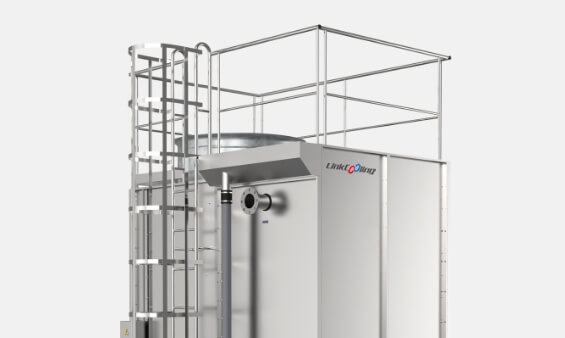
Linkcooling's Combined Flow Closed Circuit Cooling Tower integrates the advantages of both cross flow and counter flow designs. This tower combines advanced heat exchanger technology with high-efficiency cooling capacity, effectively solving splash drift loss issues while maintaining low noise levels.
.jpg?zq1db9epzw)
Advantages of Linkcooling Combined Flow Closed Circuit Cooling Tower
- Overcomes limescale problems
- Constructed with #304 stainless steel shell and coil (zinc aluminum-plate available)
- Air and water flow in the same direction with a cross flow design
- Minimal splash drift losses
- Spacious design for easy maintenance
To learn more about Linkcooling Cooling Towers and how they can benefit your operations, contact us today!