2026.05.27
Data Center
How a System Integrator Built a Production-Ready AI Server Validation Environment — A Practical Dual Cooling Architecture Case Study
- Project Background|Transforming AI Validation Environments in the Era of High-Density Computing
- Core Challenges|From Infrastructure Protection to Validation Credibility
- Technical Implementation|Designing a Stable, Flexible, and Verifiable AI Cooling Validation Platform
- Customer Value|From Risk Reduction to Competitive Advantage
- Conclusion | Making Cooling Infrastructure Part of AI Delivery Capability
From Cooling Infrastructure to Delivery Assurance
Solving AI Liquid Cooling Validation Challenges Through a Dual-Source Cooling Strategy
As AI workloads continue to scale rapidly, liquid cooling is no longer considered a future-ready option — it has become a critical infrastructure requirement for next-generation AI computing environments.
For system integrators, the challenge now extends far beyond hardware deployment alone. The true objective is to establish a validation environment capable of delivering predictable, reproducible, and customer-verifiable operational results before systems enter production deployment.
In AI server delivery, the greatest risk is often not the hardware itself, but whether the validation environment can accurately replicate real-world operating conditions and generate trusted validation data.
Without a reliable validation platform, even high-performance AI systems may encounter deployment uncertainty, customer acceptance delays, or operational risks after installation.
This case study explores how JETWELL collaborated with Linkcooling to build a flexible, stable, and deployment-ready AI liquid cooling validation environment through a dual-source cooling architecture.
1. Project Background|Transforming AI Validation Environments in the Era of High-Density Computing
As AI computing demand continues to increase, GPU power density and thermal loads are rising accordingly. Liquid cooling technology has rapidly evolved from an emerging option into a mainstream infrastructure requirement for AI data centers and high-performance computing environments.
For system integrators, this shift represents more than a hardware upgrade — it fundamentally changes how AI systems are tested, validated, and delivered.
As a publicly listed enterprise system integration provider, JETWELL has long specialized in enterprise-grade infrastructure integration and deployment services. However, under the rapid expansion of AI applications, customer expectations have changed significantly.
Today, customers expect more than successful hardware delivery. They increasingly require complete validation procedures, operational transparency, and trustworthy performance data prior to shipment and deployment.
In this project, the client faced increasingly diverse AI server validation requirements, including varying thermal conditions, flow requirements, and operational temperature ranges. As a result, the validation environment itself evolved from a supporting function into a mission-critical component of the overall delivery workflow.
The key challenge therefore became clear:
How can a system integrator establish a stable yet flexible validation environment capable of supporting real-world AI deployment scenarios?
This question ultimately became the starting point of the collaboration between Linkcooling and the client.
2. Core Challenges|From Infrastructure Protection to Validation Credibility
During the planning phase, Linkcooling and the client identified several critical operational challenges.
Protecting High-Value AI Infrastructure from Water Quality Risks
AI liquid cooling systems involve highly sensitive and high-value infrastructure components. Water quality stability is therefore essential for maintaining thermal performance, equipment reliability, and long-term operational integrity.
Scaling, contamination, biological growth, or particulate accumulation can negatively impact cooling efficiency and increase the risk of equipment degradation or failure. More importantly, unstable water conditions may compromise the accuracy and repeatability of validation results.
For AI liquid cooling environments, water quality management is not simply a maintenance issue — it directly affects testing reliability and customer confidence.
Supporting Diverse Validation Scenarios with Flexible Cooling Conditions
Different AI deployment environments require significantly different cooling strategies and operating temperature conditions.
These scenarios may include:
- Precision-controlled low-temperature chilled water environments
- Medium- to high-temperature cooling water conditions
- Variable flow rates and dynamic workload simulations
- Customer-specific operational profiles
The challenge was to design a single validation platform capable of flexibly adapting to these varying conditions while maintaining operational consistency and system stability.
Ensuring Validation Credibility and Customer Acceptance
In modern AI infrastructure deployment, proving that a system can simply “operate” is no longer sufficient.
Customers increasingly require:
- Complete operational visibility
- Reproducible validation procedures
- Testing environments aligned with real-world deployment conditions
- Traceable and verifiable performance records
As a result, the validation platform itself became a critical component of customer acceptance and delivery assurance.

Common Risks in AI Liquid Cooling Testing

Water Quality Issues

Impurities and scaling risk damage to components and reduce system reliability.

Inaccurate Data
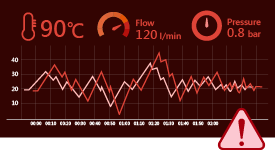
Unreliable test data leads to wrong judgment and validation failure.

Unstable Temperature Control
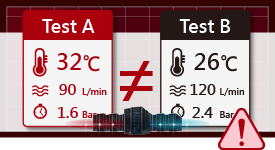
Inconsistent cooling performance affects test accuracy.

Customer Trust & Acceptance Risk
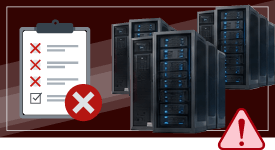
Test results cannot be trusted, causing delays or even rejection.

Higher Return Risk & Cost
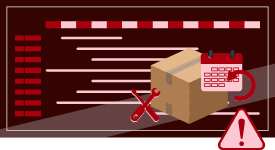
Test mismatch may lead to returns, rework, and increased costs.
3. Technical Implementation|Designing a Stable, Flexible, and Verifiable AI Cooling Validation Platform
To address these challenges, Linkcooling developed a comprehensive AI liquid cooling validation solution centered around three core principles:
- Operational Stability
- Infrastructure Protection
- Validation Reliability
The resulting architecture integrated:
Dual-Source Cooling × Intelligent Monitoring & Control × Water Quality Safeguard Architecture
Dual-Source Cooling Architecture|Enabling Flexible AI Validation Scenarios
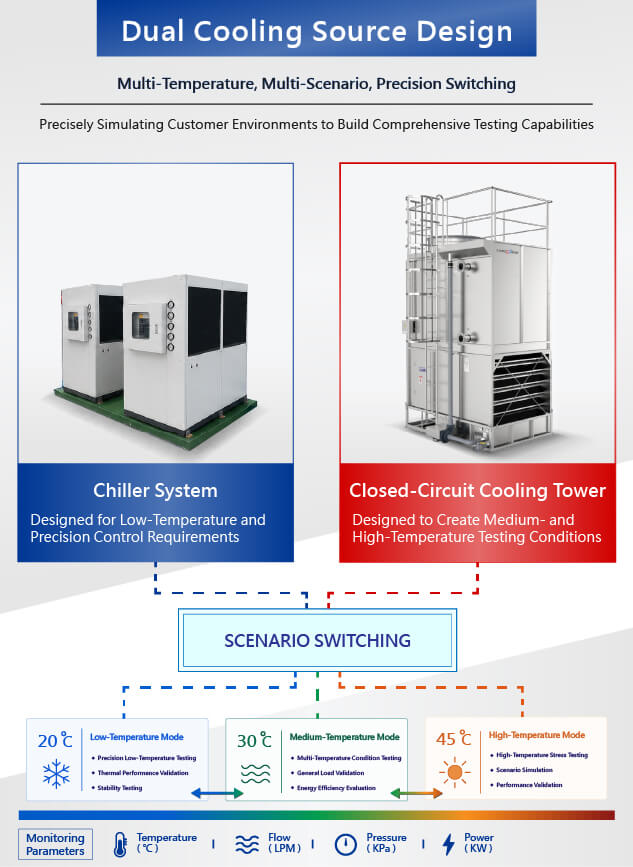
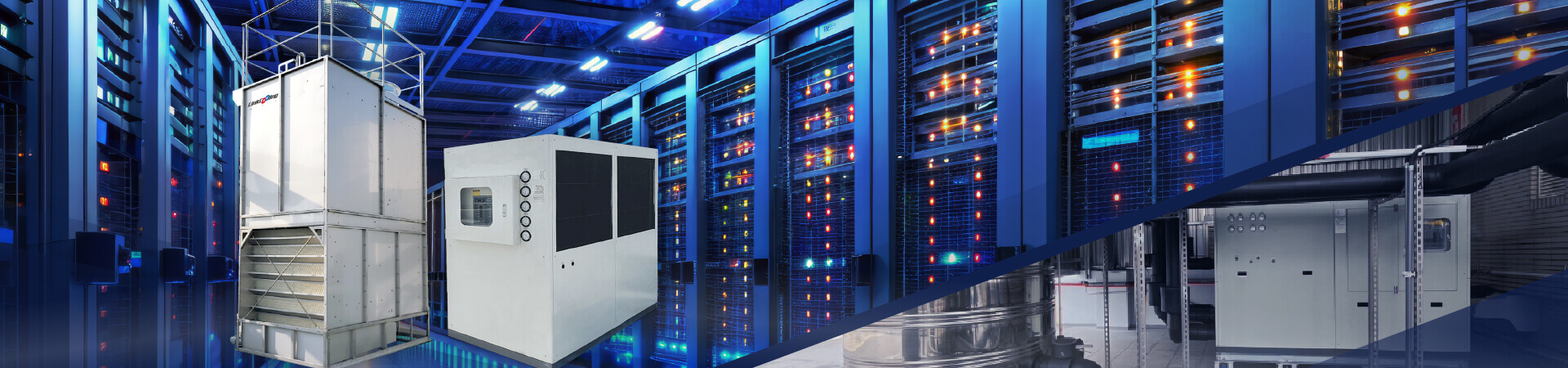
The project implemented a dual-source cooling architecture integrating:
- Chiller systems
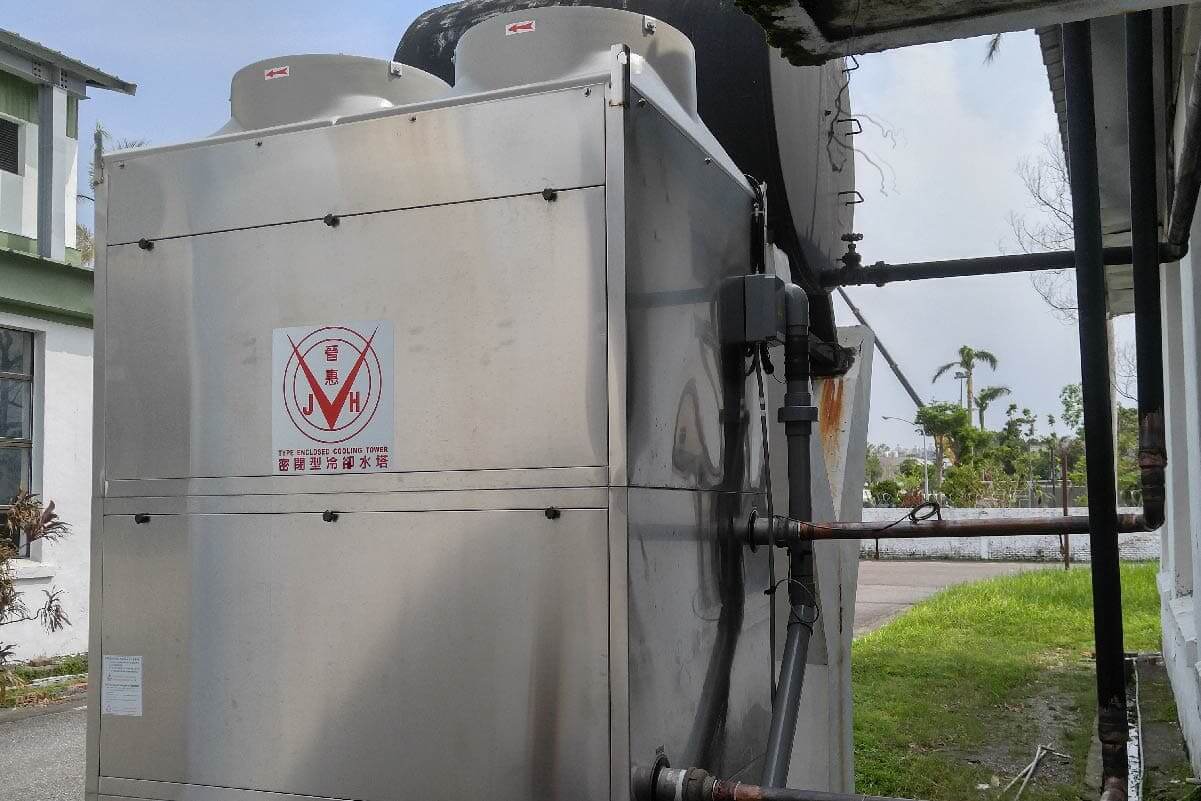
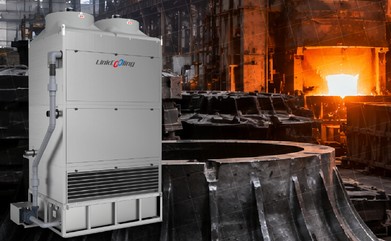
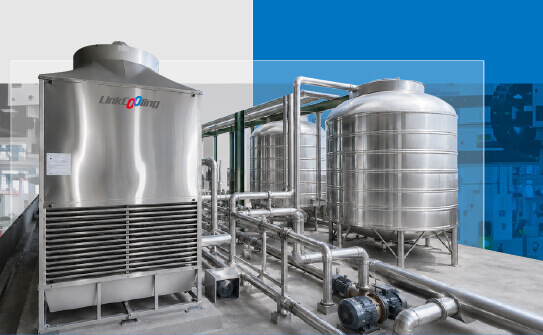
- Closed-circuit cooling towers
The cooling strategy was designed to support multiple operational requirements dynamically.
Precision Low-Temperature Validation
For applications requiring tightly controlled low-temperature environments, the system operates through the chiller platform to ensure stable and precise thermal management.
Medium-to-High Temperature AI Testing (30–45°C)
For broader thermal simulation scenarios, the closed-circuit cooling tower provides flexible cooling water conditions corresponding to various AI server deployment requirements.
Through intelligent system integration, both cooling sources can operate independently, switch dynamically, or run collaboratively according to validation requirements.
This architecture enables the platform to:
- Support multiple cooling profiles
- Simulate customer-specific deployment conditions
- Establish reproducible validation procedures
- Improve testing consistency and reliability
- Generate verifiable operational benchmarks
Why Dual-Source Cooling Matters in AI Validation Environments
AI validation environments rarely operate under a single thermal condition.
Different AI server configurations, workloads, and deployment scenarios require different cooling strategies. A single cooling source is often insufficient to support all validation requirements effectively.
By integrating both chiller systems and closed-circuit cooling towers into a unified architecture, the platform gains the flexibility necessary to support diverse validation scenarios.
Chiller Systems
Designed for:
- Precision cooling
- Low-temperature operation
- Stable thermal control
Closed-Circuit Cooling Towers
Designed for:
- Medium- and high-temperature validation
- Flexible thermal condition simulation
- Real-world deployment scenario replication
This dual-source strategy enables the validation environment to become:
- Flexible
- Reproducible
- Verifiable
- Deployment-ready
transforming cooling infrastructure into a foundational component of AI delivery capability.
Intelligent Monitoring & Control Architecture|Turning Operational Data into Delivery Confidence
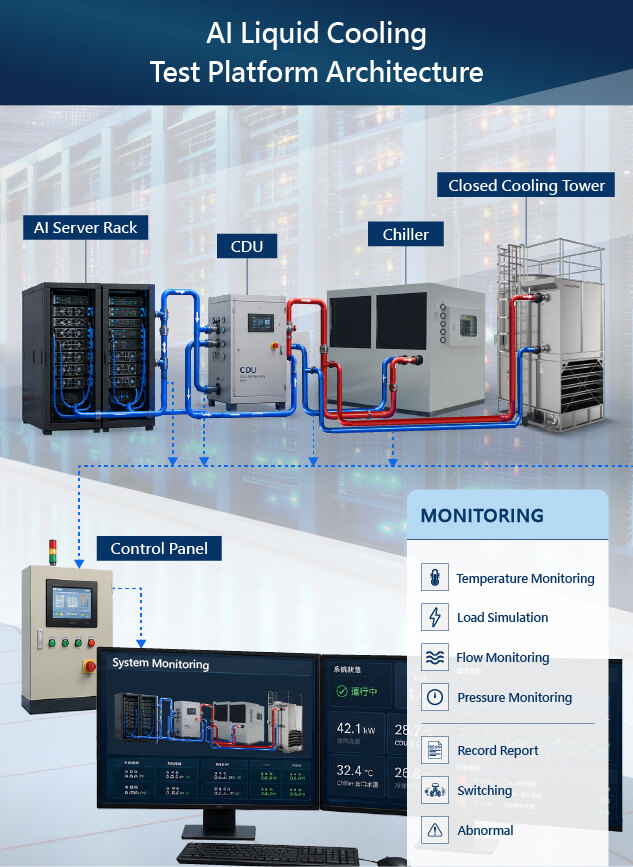
To ensure stable and transparent operation, the project introduced a customized intelligent monitoring and control platform integrating:
- Water temperature monitoring
- Flow rate monitoring
- Equipment operational status management
- System automation logic
Key capabilities include:
- Real-time operational monitoring
- Automated water loop switching
- Abnormal condition alerts
- Remote monitoring and operation
- Historical data recording and reporting
Beyond operational management, the system also enables validation data to become part of customer acceptance and deployment documentation.
This significantly improves operational transparency, validation traceability, and customer confidence in testing results.
Integrated Water Quality Safeguard Architecture|Protecting Critical AI Cooling Infrastructure from the Source
To address the stringent water quality requirements of AI liquid cooling environments, the project implemented:
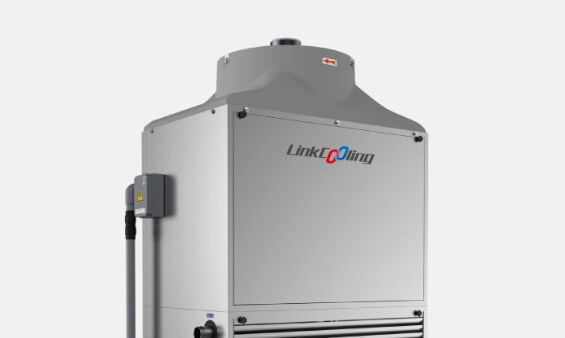
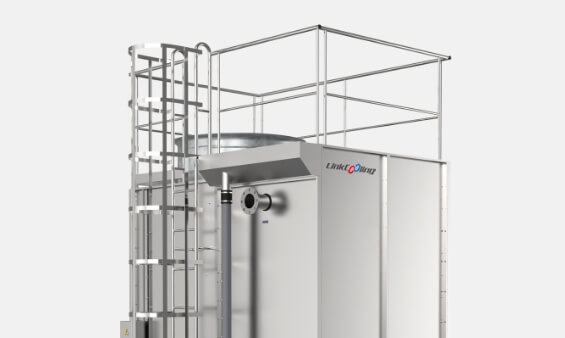
- HCT-J120 stainless steel closed-circuit cooling towers
- WCR series chillers
- Plate heat exchanger isolation architecture
This design establishes thermal separation and flexible switching capability between chilled water and cooling water systems while improving operational stability.
To further strengthen biological control and water management capability, ultraviolet sterilization systems were also integrated to support specialized customer testing requirements.
The resulting water quality management architecture helps:
- Reduce scaling and contamination risks
- Protect high-value infrastructure assets
- Improve long-term operational reliability
- Maintain consistency across validation scenarios
ensuring that every validation result is built upon a stable and trustworthy operational foundation.

4. Customer Value|From Risk Reduction to Competitive Advantage
Through this project, Linkcooling helped the client achieve not only cooling infrastructure deployment, but also significant improvements in operational capability and delivery confidence.
Accelerated Deployment and Reduced Validation Iteration Time
Through comprehensive planning, engineering integration, and collaborative implementation, the project significantly reduced adjustment cycles and accelerated validation environment deployment.
Enhanced Protection for High-Value AI Infrastructure
By implementing comprehensive water quality management and stable thermal control architecture, the solution effectively reduced equipment wear, operational instability, and long-term infrastructure risks.
Transforming Validation Data into Customer Acceptance Evidence
With a monitorable, reproducible, and verifiable validation environment, operational data became significantly more persuasive during customer acceptance processes.
This improved delivery confidence and strengthened customer trust in overall system reliability.
From System Integrator to AI Infrastructure Solution Provider
Perhaps the most significant transformation was strategic rather than technical.
Through this project, the client evolved beyond being a traditional equipment integrator and became a provider of integrated AI validation and deployment solutions.
The platform significantly reduced validation environment deployment time, minimized risks associated with unstable water quality and thermal control, and improved both operational reliability and delivery efficiency.
5. Conclusion | Making Cooling Infrastructure Part of AI Delivery Capability
In the AI era, cooling infrastructure is no longer limited to thermal management alone.
It has become a critical foundation for:
- System stability
- Validation reliability
- Deployment readiness
- Customer delivery confidence
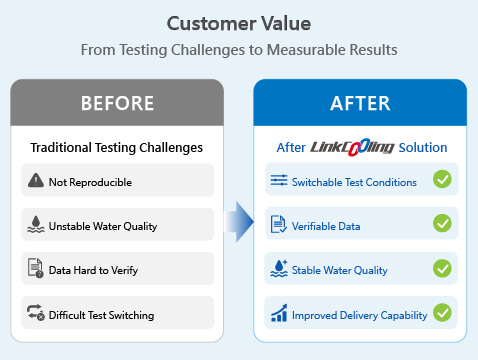
Through this collaboration, Linkcooling successfully helped the client establish:
√A comprehensive AI liquid cooling validation environment
√Support for diverse AI server testing scenarios
√Stable and verifiable operational data
√Improved customer acceptance efficiency
√Standardized validation and deployment workflows
More importantly, the project established a validation environment that is flexible, trustworthy, and deployment-ready — strengthening the client’s competitive position within the rapidly evolving AI infrastructure market.
At Linkcooling, we believe every cooling system represents far more than temperature management alone. It represents an organization’s commitment to operational quality, system reliability, and delivery assurance.
Throughout this project, Linkcooling and JETWELL collaborated closely from requirement analysis and system architecture design to final implementation, building a complete environment capable of supporting advanced AI validation workflows.
This not only improved infrastructure stability, but also strengthened trust in validation outcomes and deployment readiness.
Looking ahead, Linkcooling will continue leveraging engineering expertise and infrastructure integration capability to help customers navigate the evolving demands of AI computing environments — becoming a trusted long-term partner for next-generation AI infrastructure deployment.
If You Are Facing Challenges Such As:
- Unstable AI server testing environments
- Validation data that fails to gain customer confidence
- Cooling systems unable to support diverse deployment scenarios
Linkcooling Can Help You With:
- AI Liquid Cooling Validation Environment Planning
-
Dual-Source Cooling Architecture Design
(Chiller + Closed-Circuit Cooling Tower) - Deployment-Ready & Verifiable Cooling Infrastructure Consulting
Contact Linkcooling Today
Get a Customized Evaluation and Solution Recommendation for Your AI Infrastructure Project